I first went to Asia as a bright eyed but very naive twenty-year-old who set off to teach English in a language school on the Indonesian island of Sulawesi. I didn’t know it then but this supposed one-off would be the beginning of a longstanding connection with this part of the world that has spanned close to fifty years.
As a young woman coming from a professional, upper middle class Aussie family where education was valued regardless of gender, I was quickly confronted with the realities experienced by many of the young women I taught. Of course, I’d heard of arranged marriages, girls being denied access to school and family expectations that girls would stay home to look after ageing relatives, but when those barriers happened to girls I knew, the reality of educational inequality quickly became very up close and personal.
I wasn’t able to do anything about these inequalities at the time, but those memories were tucked away with no idea when they might resurface and translate into action.
It was hardly surprising then that, a few years later, I chose to do my PhD thesis on education policies in the Asia/Pacific region. Finally, I had the chance to look at the data and national policies to see what was actually going on at the macro level when it came to girls missing out on getting the education they dreamt of attaining.
It was as a post-grad student that I learned the World Bank and major UN agencies such as UNICEF firmly believed, and had the data to back those beliefs, that investing in girls’ education profoundly impacts not just the lives of these girls (and the lives of their younger sisters, cousins and nieces) but their communities and nations.
Educating girls can and does make a significant impact on personal, communal and national development.
Over time high flyers such as Hilary Rodham Clinton and Michelle Obama picked up these messages and championed the issue of girls’ education.
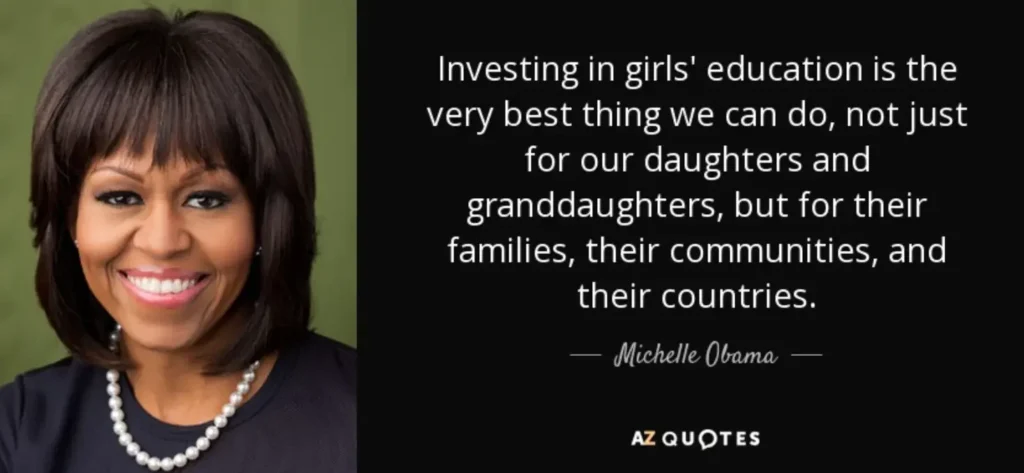
It’s no coincidence then that REECH Cambodia invests heavily in the education of girls – be they toddlers, preschoolers, teenagers, young women or even the occasional gran. This issue of REECH’s newsletter looks at just a few of the ways REECH Cambodia supports the education of girls and young women across Cambodia.
Enjoy the read – I hope it inspires you.
Jenny Knight
Chair, REECH Cambodia
Girls’ education program #1: Women of Hope’s “catch up” initiative
Long term REECH supporters will have heard of the work of Women of Hope (WoH), an agency intentionally located in the garment factory precinct of Phnom Penh. WoH recognises that working in the garment factories is hard, soul destroying work. Those sewing the garments are often rural teenage girls who have been forced to leave school long before they wanted to in order to provide financial support for their families. For many of them, their dream to finish high school had been thwarted by parental directives and family expectations. Most quickly lose all hope of ever fulfilling their dreams.
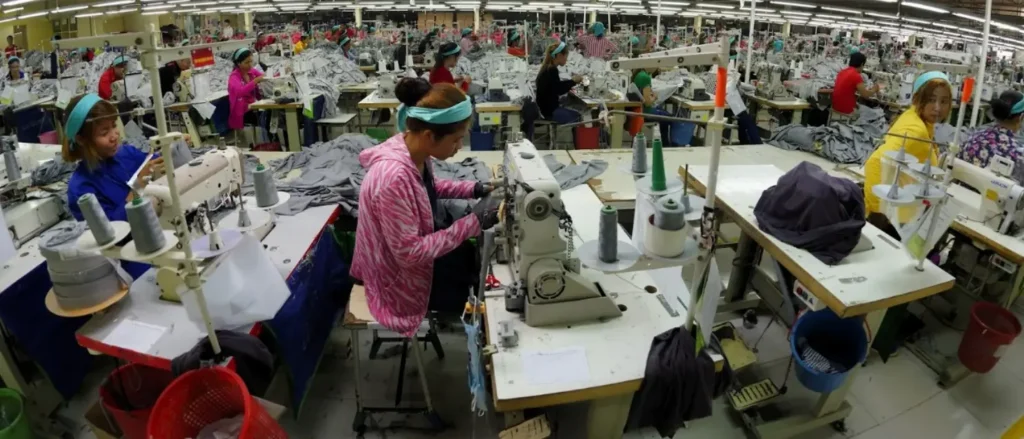
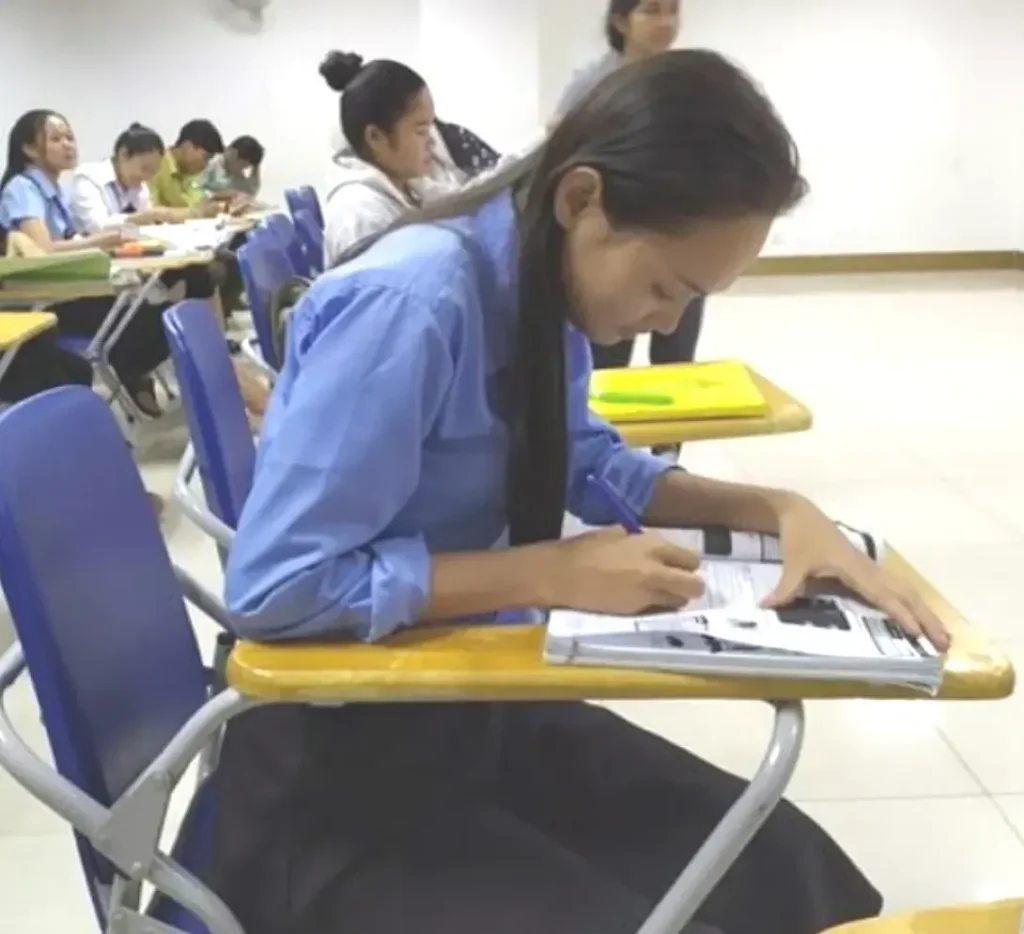
WoH provides computer, Khmer and English language classes for the young women working in the factories so the girls can have career options. Those wanting to return to high school and sit their Year 12 exams are able to attend evening and weekend “catch up” classes while remaining in full time work. Once the young women complete high school many are keen to continue with their studies and go to university. WoH makes this happen. Tutorial and pastoral support is provided to these young women to encourage them to fulfil their dreams. REECH picks up the tab for these educational programs. REECH pays for WoH teachers and tutors, social workers and counsellors as well as the girls’ high school expenses and university fees.
Once a young woman enters the WoH education program, it can take up to seven or eight years to finish high school, study at university and graduate. For a funding agency, this is a very long term commitment in the lives of these young women but REECH has decided it’s well worth the time and finances.
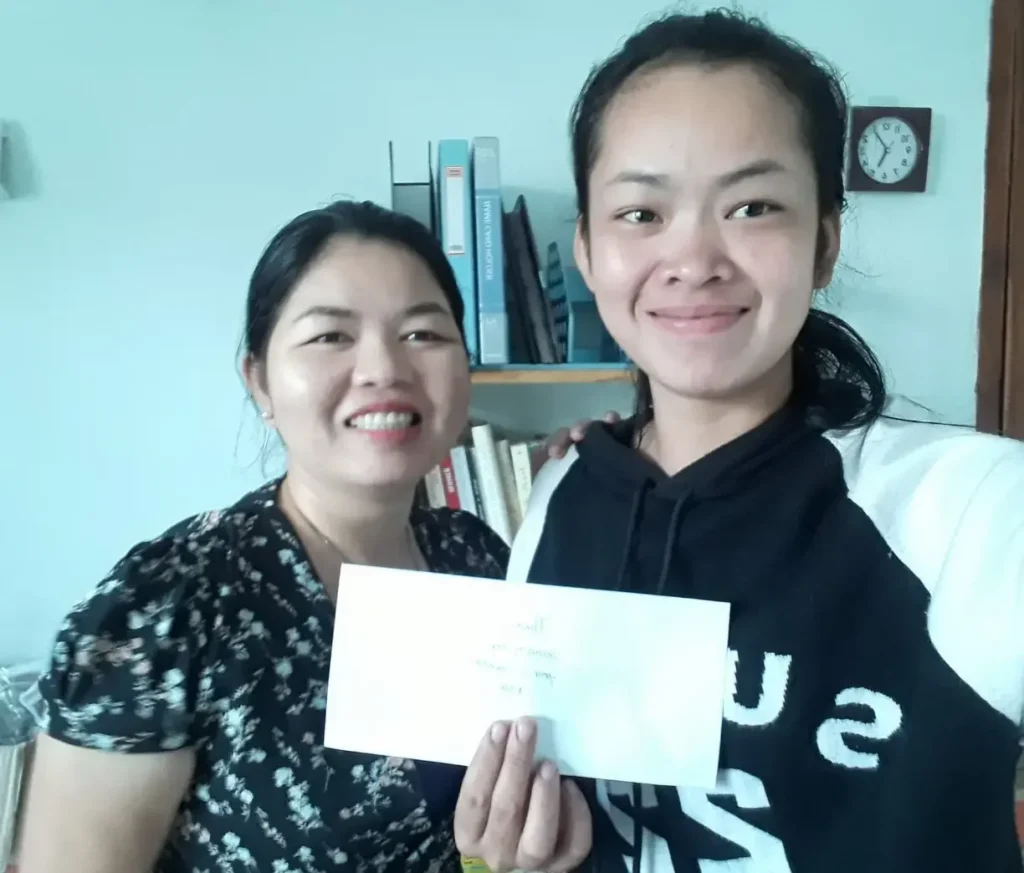
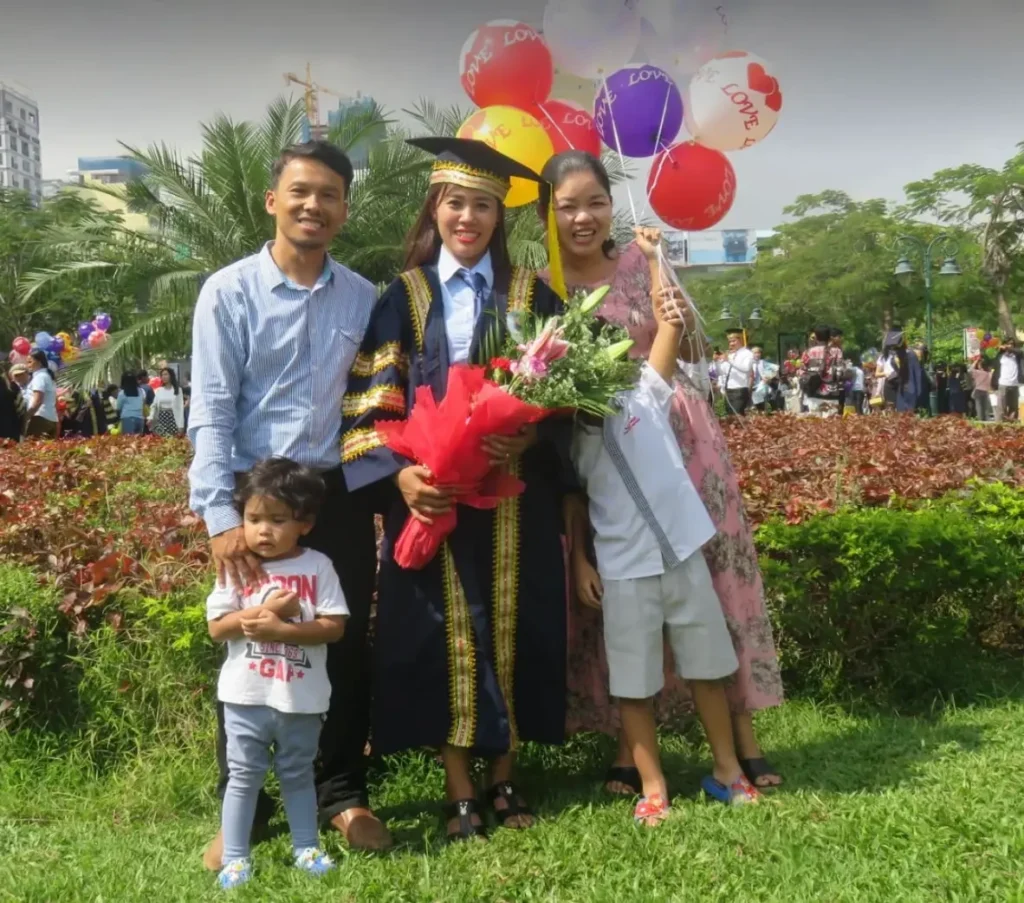
Below are photos of three REECH uni students, all former garment workers. On the left is Theany who, at the time, was in the third year of her social work degree. The photo shows her picking up the check for her uni fees. Theany graduated from social work last year and is now working as a counsellor and loving every minute of it. The middle photo is of Soklieng who studied business management. She now works for a multinational company in Phnom Penh and is welcoming the chance to put her studies into practice. The photo on the right is of Thida’s graduation. Thida works for the NFP agency, Samaritan’s Purse and loves the opportunities it provides.
While most of the women participating in WoH’s education program are young, there is one outlier – a gran, Kim Sok, who swept the floors in a garment factory for more years than she cares to remember. Sok had left school when she was in Year 2. She was illiterate and unnumerate.
Somehow Sok connected with WoH. Over time the staff noticed she always carried a book with her wherever she went. She couldn’t read it but she knew she wanted to.
With gentle encouragement, Sok studied Khmer at WoH and gradually learnt to read and write. As her confidence grew, she decided she wanted to study English. Turns out she has a natural aptitude for languages. She now speaks English quite fluently and teachers English to primary school kids enrolled in WoH’s language program.
Sok returned to school through the WoH “catch up” program. She sat her Year 9 exams last year. She’s now studying for her Year 12 exams which she hopes to take next year. While her peers spend their time looking after their grandchildren, Sok is trying to decide what to study at university!
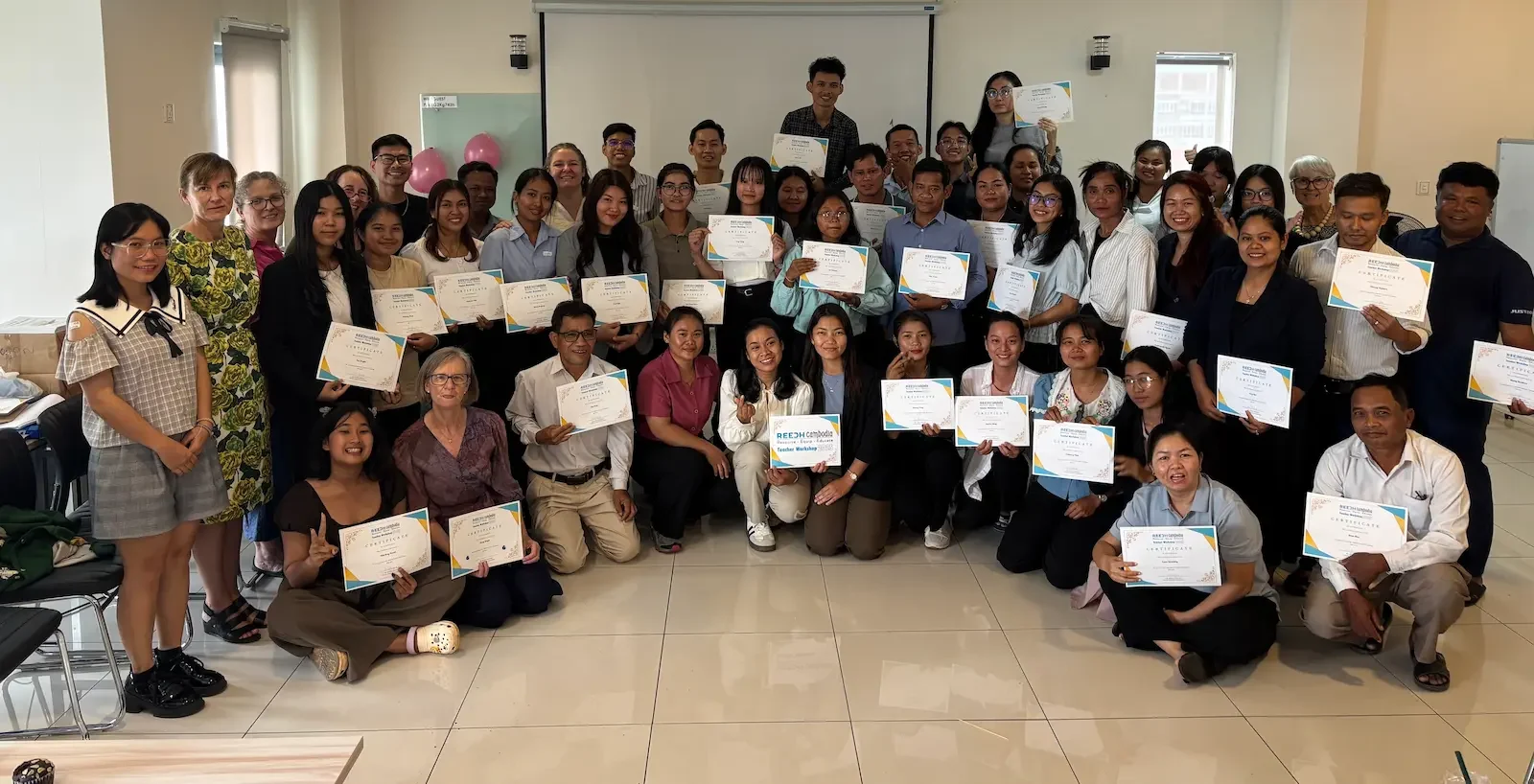
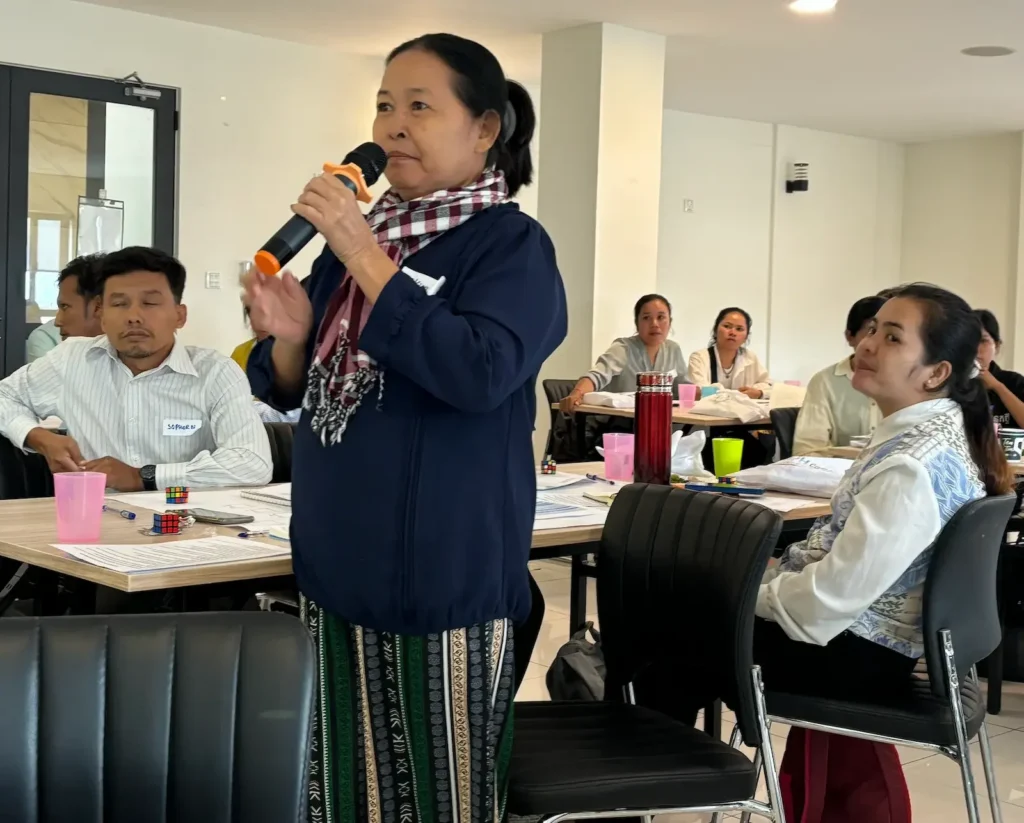
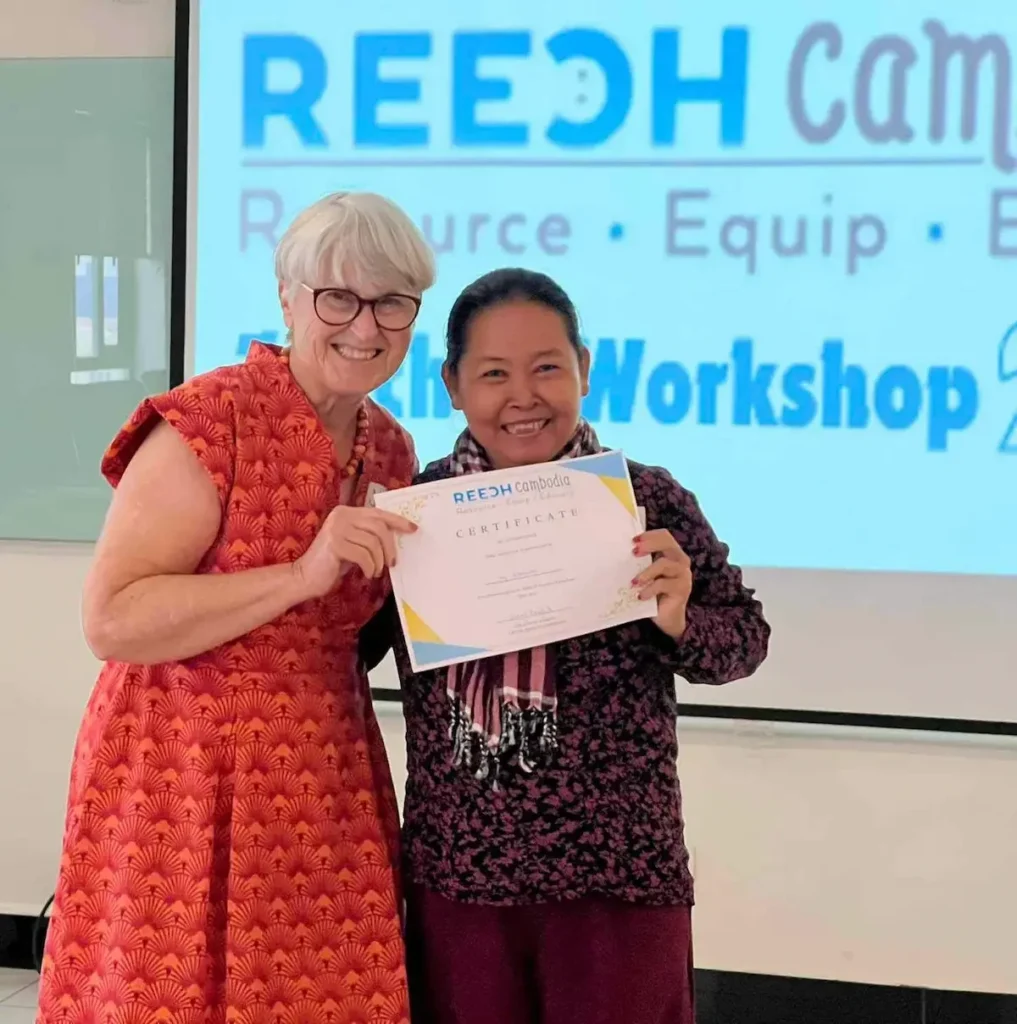
When REECH first met Sok she was shy and timid. She wouldn’t look you in the eye so low was her self-esteem. Today she is poised and confident – so much so that she readily contributed to last year’s teacher training workshops as you can see in the left photo below. That’s her receiving her certificate of training at the end of those workshops in the right photo. She’s an inspiration and a legend to all the younger students at WoH.
Girls’ education program #2: Precious Women’s scholarship scheme
REECH connected with Precious Woman well over ten years ago. They run a wide range of programs including vocational training for those working in Phnom Penh’s karaoke bars (a fancy word for brothels) as well as a scholarship based prevention program that targets highly vulnerable girls in high school.
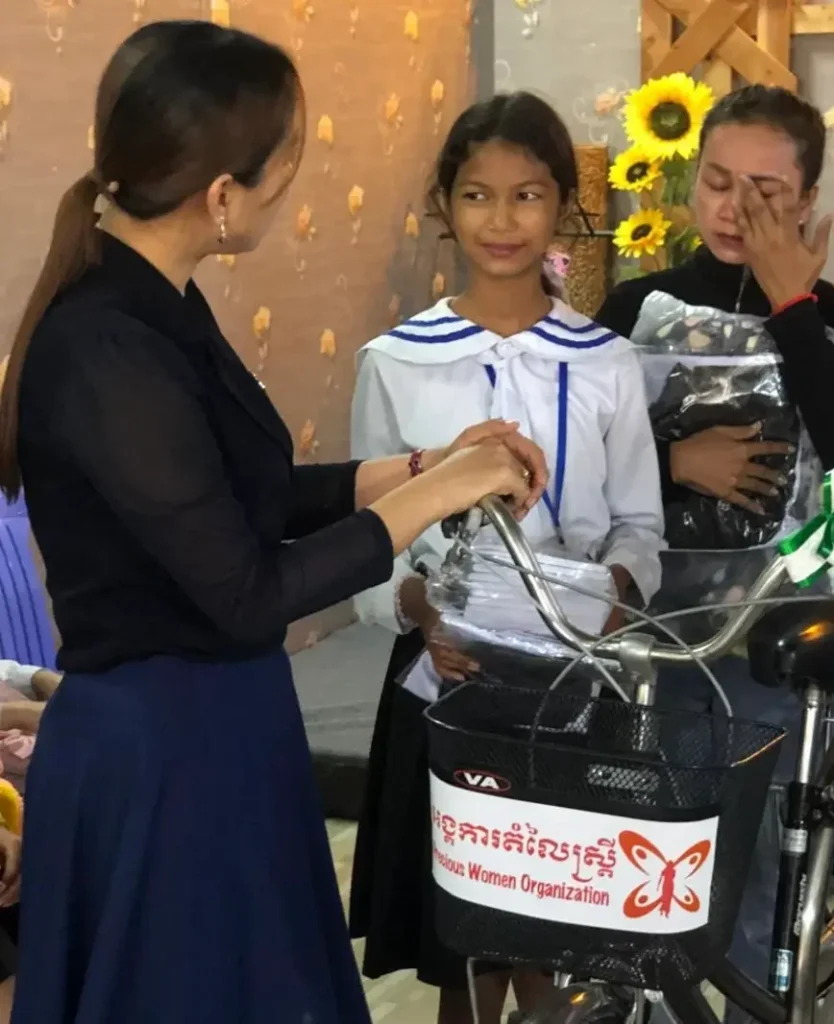
The program works with the school principals of local high schools to identify teenage girls who are, given their family circumstances, at risk of leaving school to work in either the garment factories or karaoke bars. Through REECH’s financial assistance, Precious Women provides these targeted girls a push bike so they can get to school, a school supply pack, school uniforms, bags of rice and a small monthly allowance. The girls regularly meet with Precious Women staff who encourage and support them in their studies.
All of the girls in this program will be the first in their family to complete high school. All are excitedly planning to go onto university. When I met with them earlier this year, they told me, some as they choked back tears, that they wanted to study teaching, pharmacy, code writing, law, accounting and medicine. REECH will do all it can financially to ensure these dreams are realised.
As I chatted with the students in January, I spotted a young girl with a slightly older woman at the back of the room. Turns out the older woman was the girl’s mum who had tears streaming down her face for most of our time together. Her daughter had joined the scholarship program a week ago and mum was overwhelmed with what this opportunity meant for her daughter (she was still wiping the tears from her eyes when we took the photo on the left). The mum, more so than her daughter, knew the difference this gift of access to education would make in her girl’s life.
Girls’ education program #3: Cambodia Cares’ Girl Go Back to School project
Given that Cambodia is the least urbanised country in SouthEast Asia, REECH recognises the importance of supporting agencies working in rural provinces and ensuring that the girls in those often quite remote areas are also encouraged to stay at school.
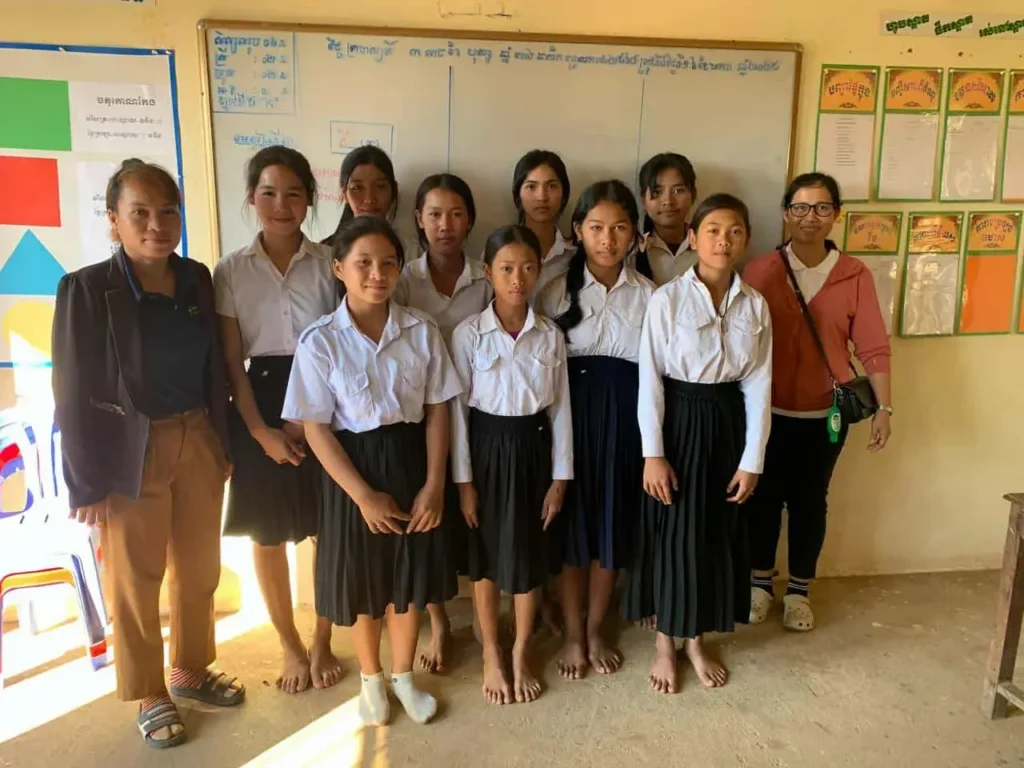
Cambodia Cares’ project works with ten junior high school girls in the province of Karatie, northeast of Phnom Penh and close to the Vietnam border. REECH employs a teacher for these girls. This teacher is the girls’ educator, advocate, supporter and inspiration. She not only educates them but encourages them to stay at school for as long as possible, speaks with their parents to ensure the family understands the importance of keeping their daughters in school and liaises with community leaders to smooth any barriers that may stand in the way of the girls’ progress.
Each of these girls dreams of staying in school, sitting the all-important Year 12 national exams and going to university. Their parents are slowly accepting these high aspirations; their community is beginning to appreciate just how important these dreams are. REECH has the easy part – we just pay the teacher to do whatever she can to realise these dream.
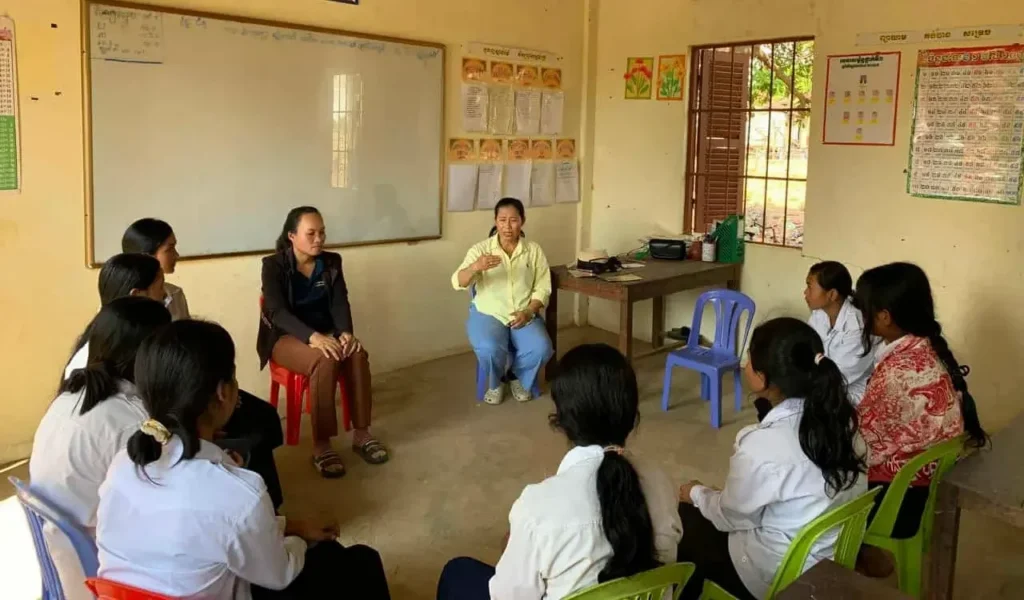
There are a few common threads in these three programs. Each one prioritises the education of girls and young women and they do so in a very targeted and intentional way. Each girl in these programs is seen and known. Each girl is not just a student in an overcrowded classroom with no one paying attention to her or her unique needs. REECH students have the support of their teachers, are provided with one-on-one tutors if needed, have access to counsellors and social workers who will walk with them through any emotional or life challenges they may face. REECH’s commitment to placing an intentional community of support around each student is ensuring teenage girls pass their national Year 12 exams and young women graduate from university. It really does take a village.