Introducing our
Programs with purpose
Discover practical initiatives designed by REECH to support education, dignity, and long-term wellbeing for women, girls, and communities across Cambodia.
About our programs
REECH programs are initiatives we have developed in close relationship with our partner organisations and the communities they serve. Each program responds to a real, observed need — shaped through listening, regular visits, and long-term connection rather than distant assumptions. While our partners lead the day-to-day work locally, these programs are REECH’s way of resourcing, equipping, and strengthening that work in tangible ways. Together, they reflect our commitment to education, dignity, and sustainable opportunity.
Discover our programs
From education and professional development to dignity, creativity, and personal renewal, each program tells a different part of the REECH story. Some are practical and immediate, others are relational and reflective, but all are rooted in real people and real places. Explore a selection of our programs to see how these initiatives come to life.
Equip
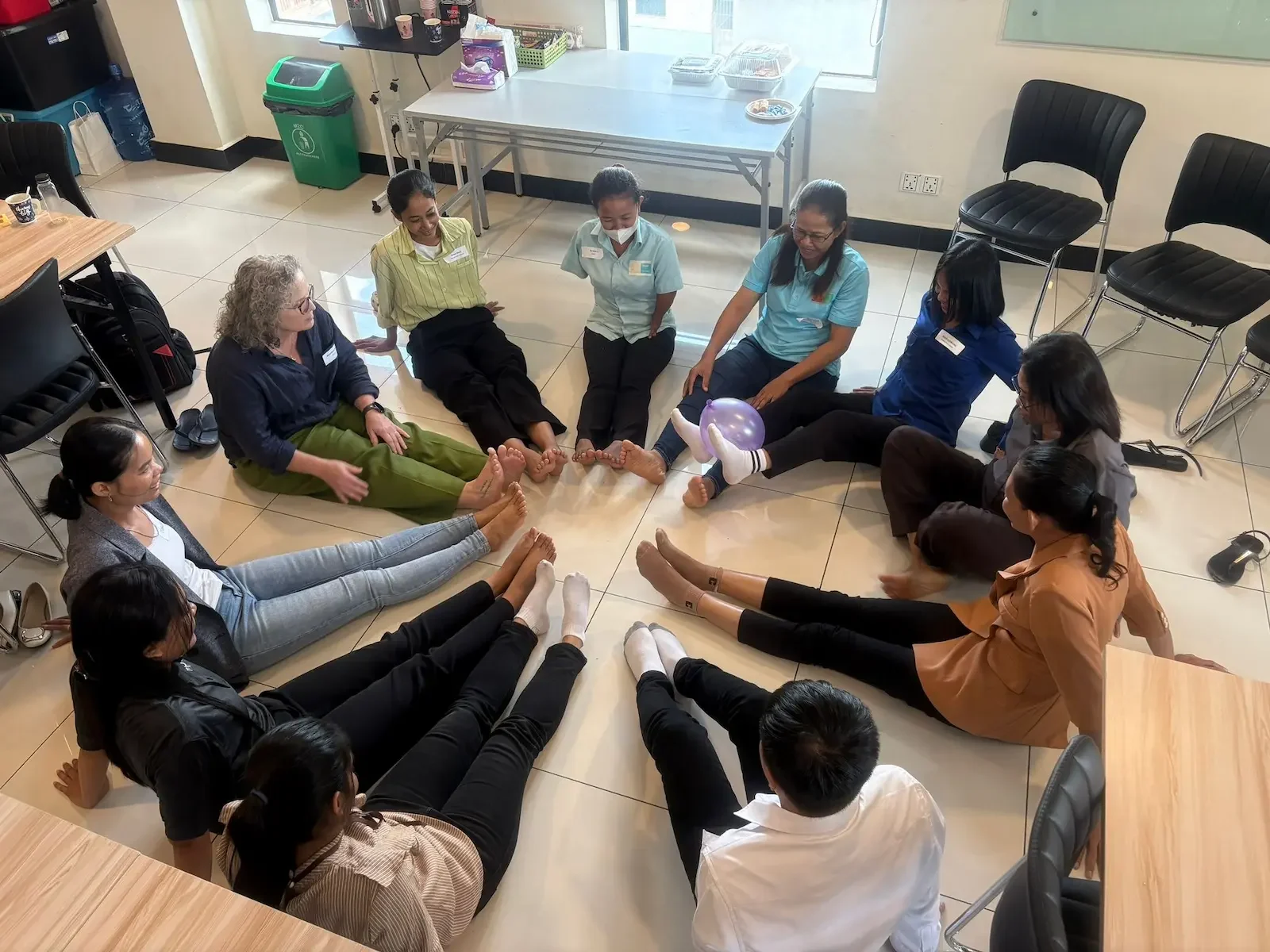
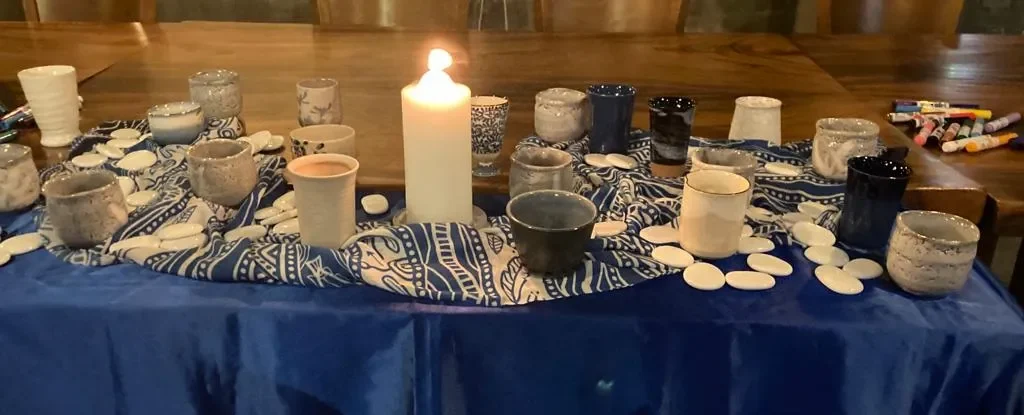
The SoulSpace retreats
One of our church pastors visited many of the REECH agencies in 2015. She noticed how many of the women who headed up these tiny not-for-profits seemed to be exhausted in every sense of the word – physically, emotionally and spiritually. Not surprising really when you consider how hard they work with so little financial and often emotional support.
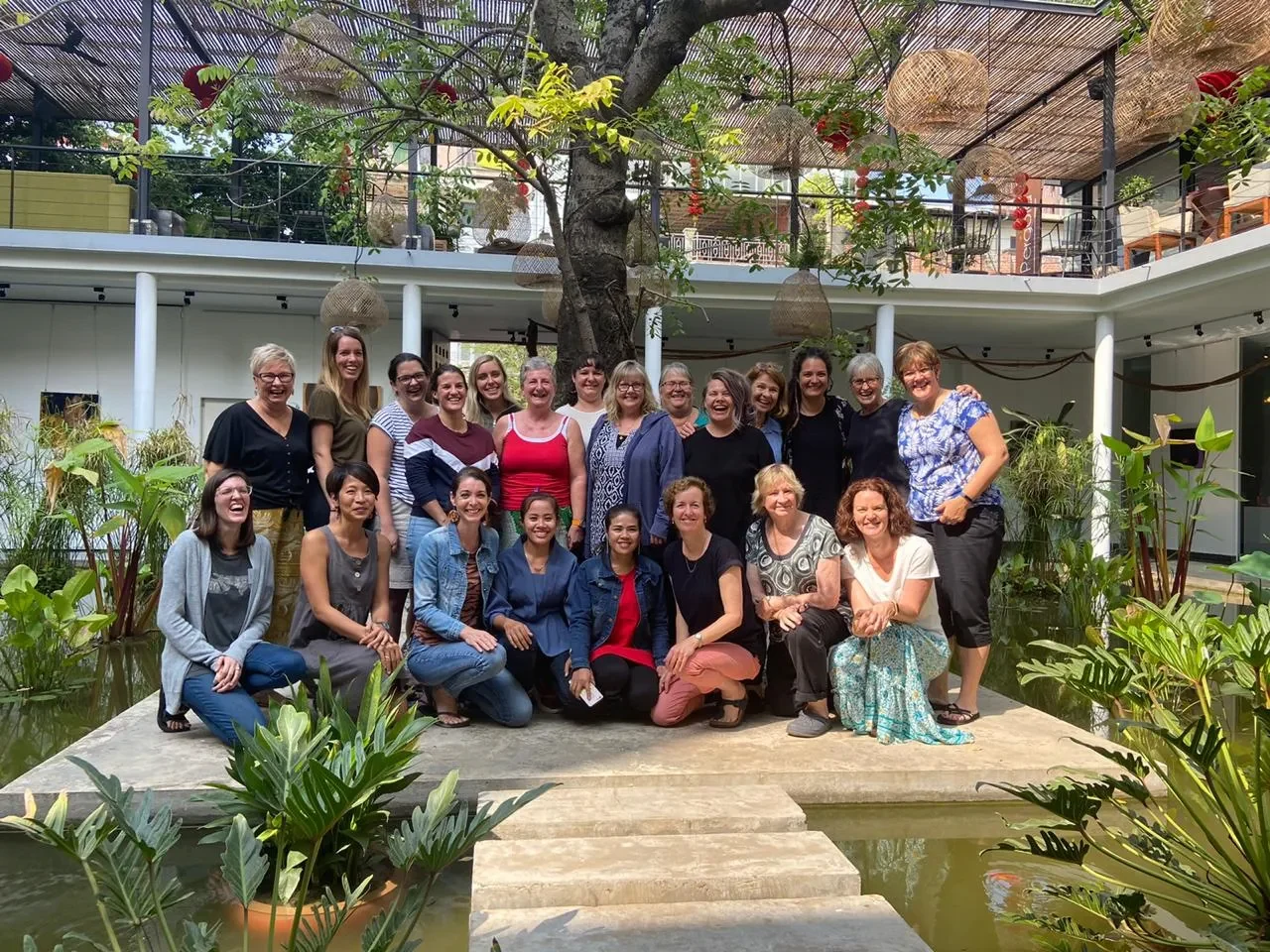
She suggested they may benefit from a weekend away to refresh. The idea was too good not to explore and so the following year we invited ten women to what was to become known as a SoulSpace retreat. Since then, a team of Aussie women, most with qualifications and experience in counselling and spiritual direction, have offered female leaders of not-for-profit agencies across Cambodia a safe place to unwind, refresh and connect with themselves, other retreat participants and their God. The weekends are loosely structured around a theme focusing on various spiritual practices, creative workshops, worship, fabulous food and plenty of unstructured free time.
Each time participants tell how much this time out means to them:
I was so overwhelmingly blessed by the SoulSpace retreat. It was exactly what my heart and soul needed even though I didn’t know it… My heart can’t thank you enough for all you gave to do this for me.
—Participant from Siem Reap
You are each a precious gift to us and to Cambodia. I’m so very grateful for SoulSpace. This is my first retreat for a couple of years, and every pore of my being needed this weekend! Thank you, thank you, to all who make SoulSpace possible.
—Participant from Phnom Penh
Thank you! Thank you for coming back again and again, for taking the time to know us and go deeper each year. That is truly special and stand-out-for-me.
— Participant from Takao (rural Cambodia)
Educate
The power and promise of education: Recording the stories of young garment workers
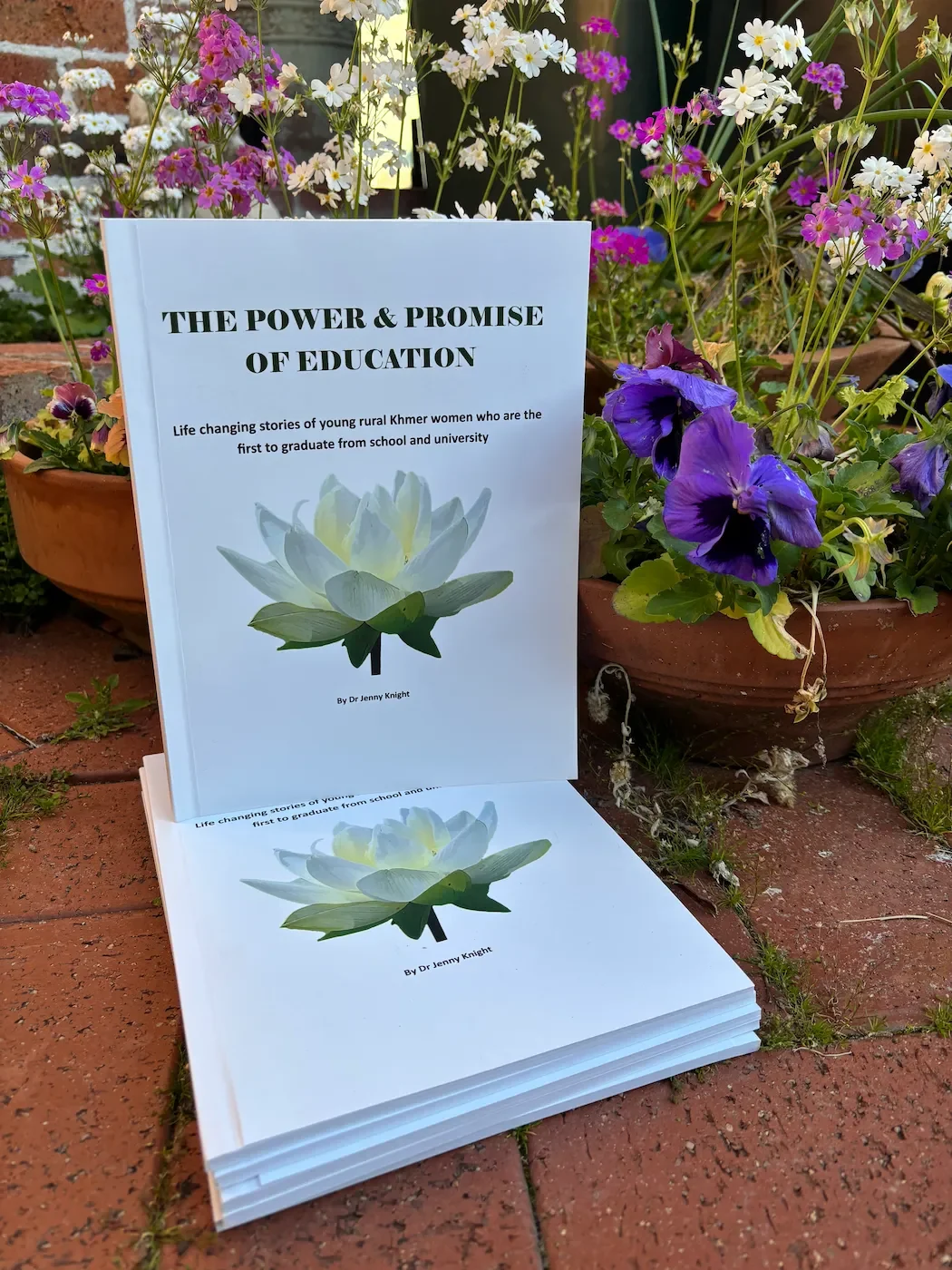
For years Jenny Knight, co-founder of REECH Cambodia, had been hearing stories of teenage girls and young women who’d been taken out of school by their parents long before their dreams of completing school had been realised. Each one of them had been sent to work in garment factories to earn money for their family. These young women had somehow (often through a REECH supported agency) returned to school, graduated from Year 12, gone on to enrol in and graduate from university. In doing so, they became the first in their family – and often village – to achieve any of these milestones. They did so against incredible odds and enormous barriers.
Jenny figured these stories were too powerful not to record in some way. In November 2022 she went to Phnom Penh with just one purpose: to interview as many young women as she could who were the first in their family to graduate from university. She interviewed 17 women that week.
In listening to these young women, Jenny quickly realised she had seriously underestimated the level of violence, paternal addictions and abject poverty most of these young women have lived with, their guts, sheer determination, stick-to-it-ness, commitment, vision and passion and just how dangerous it is to work in garment factories. It was such an honour for her to listen to those stories.
Often in faltering English each young woman spoke of how massively her life has been changed forever by education. How finally her dad acknowledges her as someone of whom he can be proud. How she has now travel overseas for work. How she wants to keep studying because she’s caught that bug and wants more of it. How she wants to set up a library in her very remote village so the kids can have access to books. How she gets up every morning and smiles to herself because she’s so incredibly proud of what she’s achieved.
Each interview began with the women telling, with tears rolling down their faces, of their mums and how they determined at a very young age that their mums’ story would not be their story. Each interview concluded with an enormous smile as they told of their new life – one free of violence, addiction and grinding poverty.
These stories were written up, translated into Khmer and printed into a tiny bilingual book. The book was launched Cambodia in November 2024. It was released in Australian on International Women’s Day in March 2025. The book is available in Australia for $15. This covers printing costs and ensures books can be freely provided to young Cambodian women.
Educate
Teacher Training Workshops
Cambodia wears the scars of the reign of the Khmer Rouge during the late 1970s in so many ways. One of the lasting legacies of that civil war and the genocide that came with it, is the devastating long-term impact it had upon the nation’s education system. Schools, universities, teachers and students were all affected as the system was systematically torn apart within just a few years. It’s estimated that 90% of the country’s teachers and academics were killed at this time. Schools and universities were closed and were either burned down or turned into prisons and re-education camps. Children were recruited to work for the Khmer Rouge.
Fast forward a couple of decades and, in 2022, Cambodia was the lowest ranking Asian country in universal assessments conducted by PISA (Programme for International Student Assessment). Neighbouring Vietnam ranked 7th of the 23 countries.
This poor performance is hardly surprising given 65% of teachers don’t have any formal teacher training with most of those having completed only a short two-year course. This means many teachers are not equipped to provide quality instruction and nurture essential skills such as critical thinking, creativity and imagination.
REECH has a very multi-faceted commitment to education. REECH financially supports agencies that put young women through high school and university. It also provides financial assistance for agencies to purchase classroom tables and chairs, whiteboards and school supplies. Given this involvement in various facets of education it wasn’t really a surprise when REECH-supported agencies started asking for help in upskilling their teaching staff.
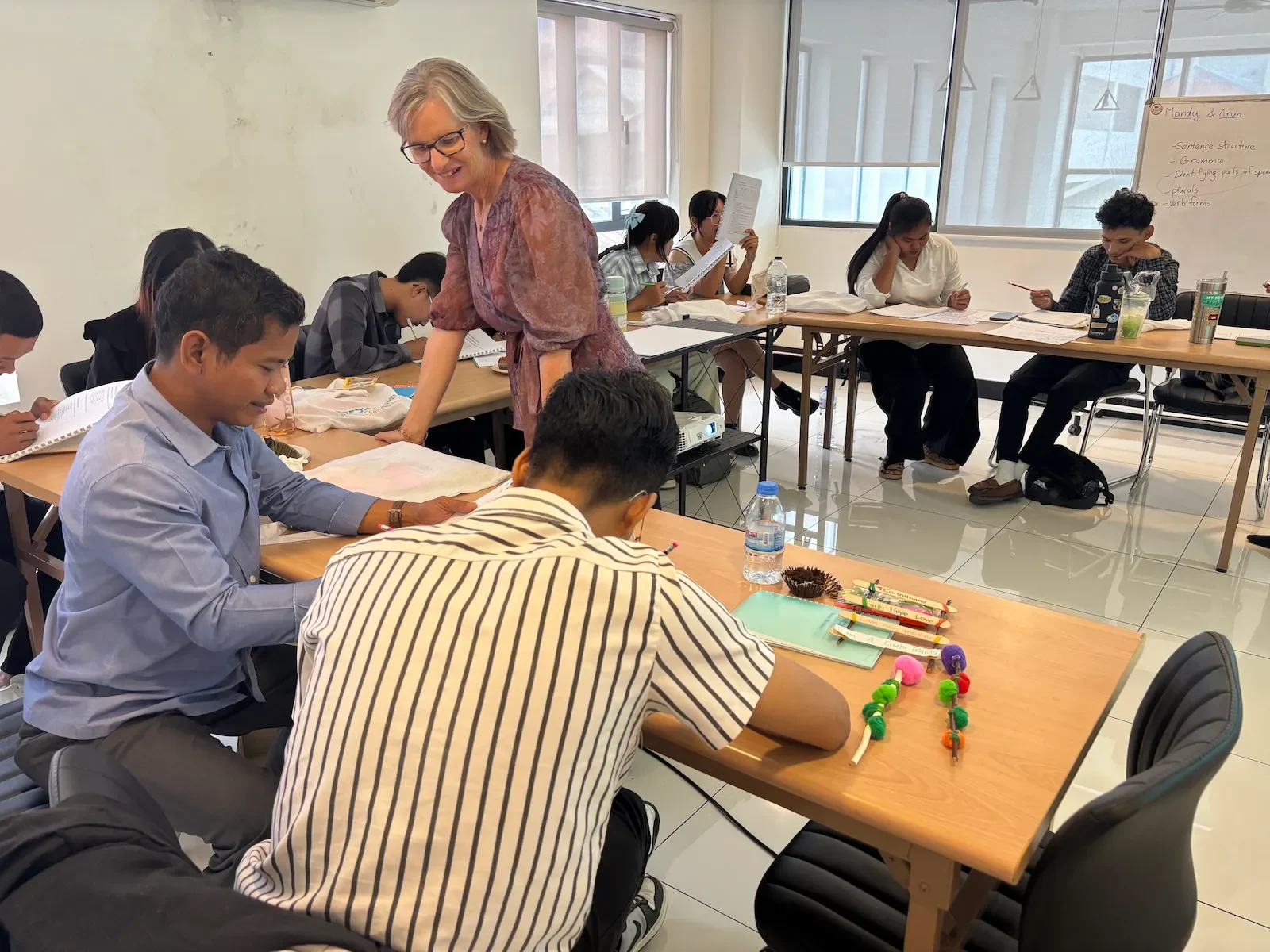
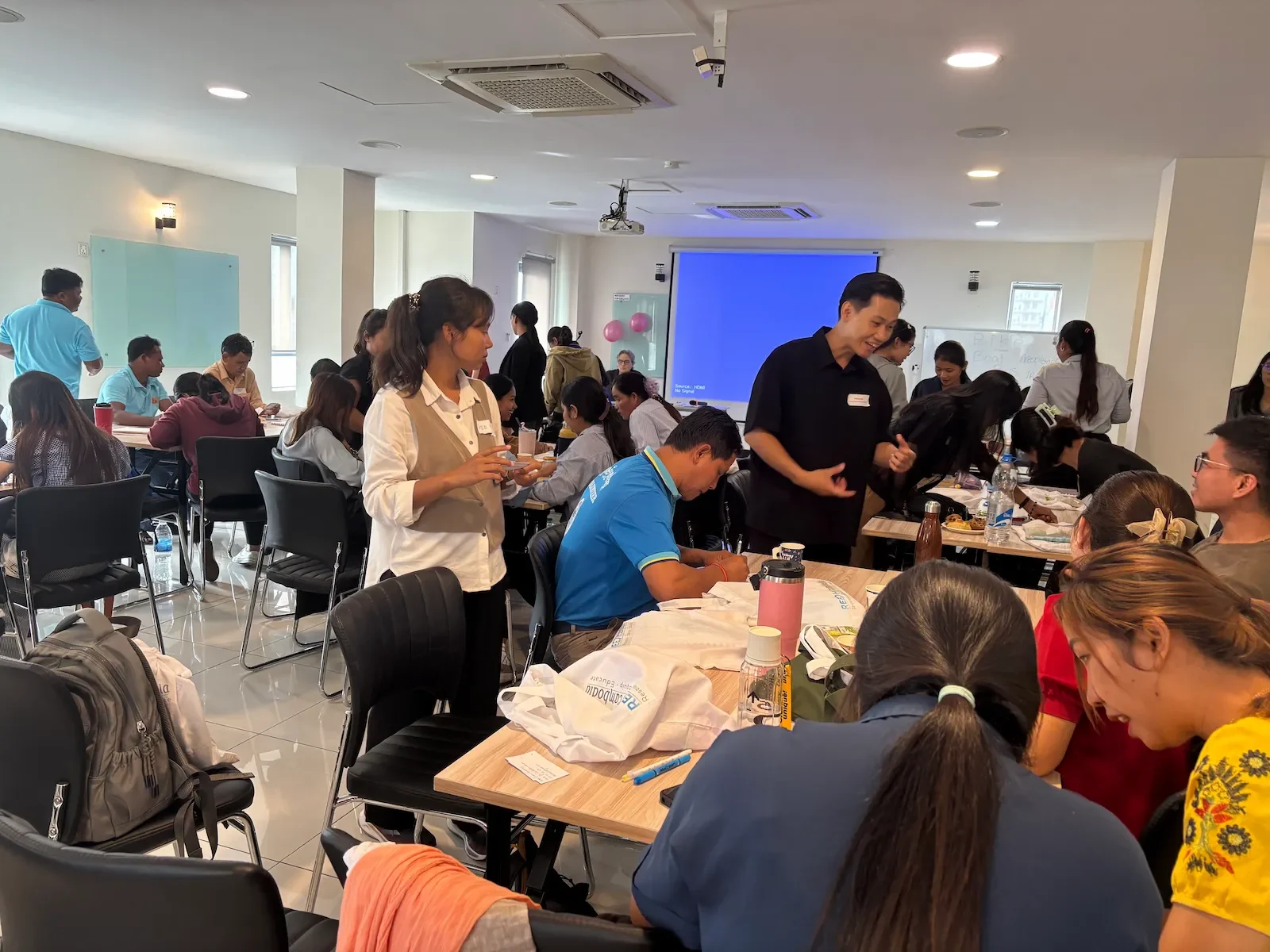
In response to these requests a team of six Aussie educators went to Cambodia in July 2022 to run professional development workshops for 24 participants. The feedback from these workshops was overwhelmingly positive. The team was repeatedly asked to “come back soon”. From the feedback received participants commented that they appreciated the effort that had been put in to ensure everyone felt included. All handouts were in both English and Khmer; each English speaker used a Khmer translator and a venue had been chosen that provided wheelchair access. We learnt very early on that it’s the little things that can make all the difference and send an important message of equity and inclusion.
As requested, the team has returned. They were there in 2024 with 45 teachers attending and again in 2025 when 93 teachers from 6 provinces came to the workshops. By this stage the workshops were duplicated, with the team running them on two occasions. Clearly, a huge need is being met.
Given the success of this program, REECH was asked in 2024 to provide training specifically for school principals. This request made perfect sense given just 6% of the nation’s principals have received leadership training. This lack of investment in school leadership and limited opportunities for professional development are significant barriers to improving the country’s educational standing. In 2025, 21 principals, directors of learning centres and others involved in education leadership attended workshops lead by an Aussie principal who heads up a school for refugee students. She was able to speak from first-hand experience of trauma in the classroom and a range of cross-cultural issues. The leaders were profusive in their thanks for the content and opportunity to connect with other Khmer leaders – something none of them had had an opportunity to do beforehand.
From participants’ comments it’s clear that the teachers and leaders REECH invests in through this professional development program go back to their schools and share their new found skills and knowledge with their colleagues and students. The knock-on effect is huge.
Equip
Srey hearts collective
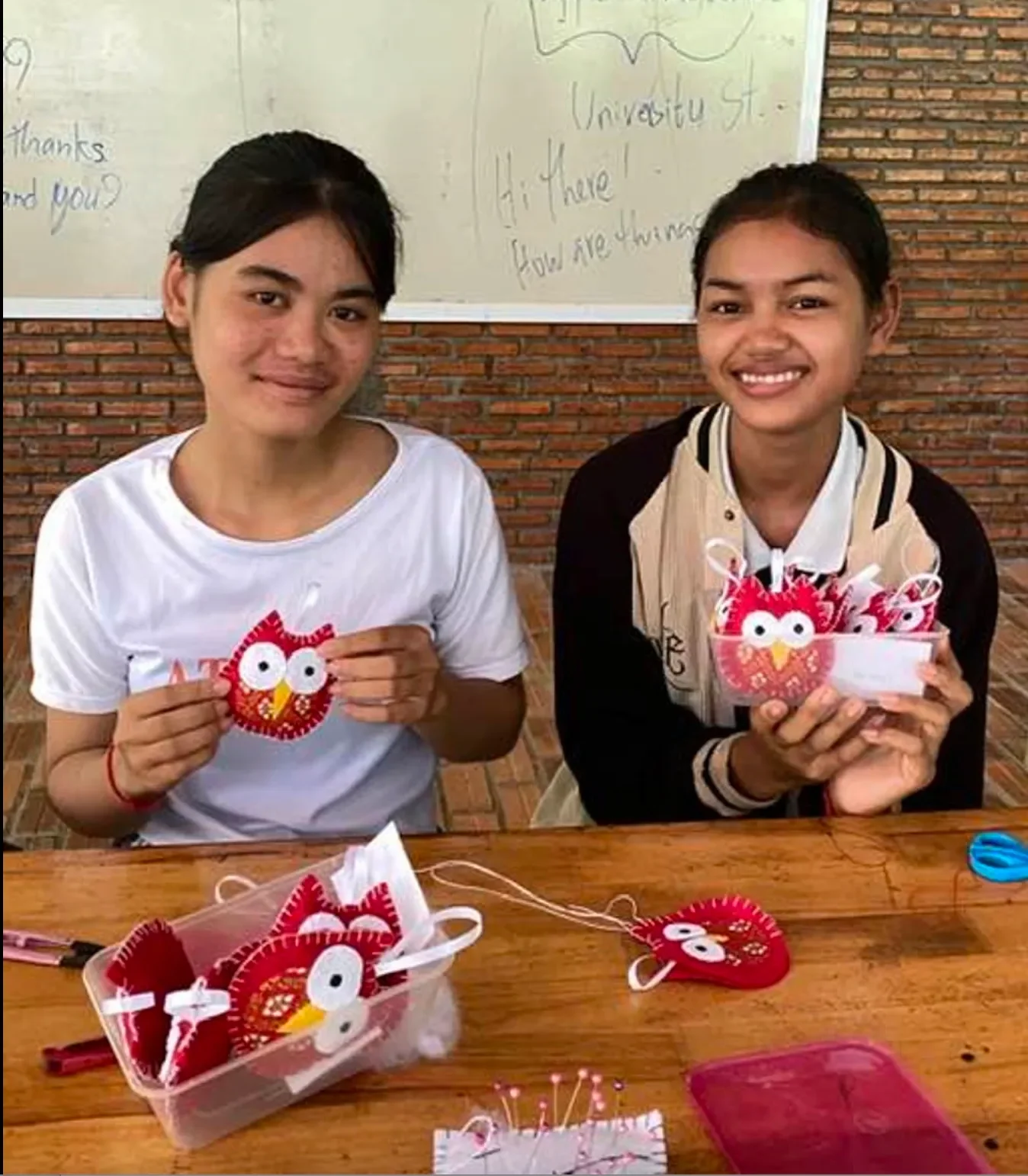
For some time now, REECH has been aware of many young Khmer women who, while working full time, are unable to earn enough money to live securely. Most young women who have moved from the provinces to work in Phnom Penh are required to send money to their families living in tiny, rural villages. While this is a kind and generous gesture on their part, it often means the young women struggle to meet their own living expenses. Other young girls, such as school students, are always keen to find ways to earn extra money to pay for school fees and essential supplies.
To meet the needs of women such as these, and in keeping with REECH’s commitment to equip those in need with the means to generate an income, the Srey Hearts Collective has been established. This is an informal group of Khmer women who create beautiful hand made products for sale in Australia. The items are purchased from the women during visits to Cambodia and sold at Aussie Christmas fair trade markets and other outlets. All profits are returned to the women.
At the moment, there are just two young women, along with a bunch of school students, contributing items to the collective. It’s anticipated numbers will grow over time.
Those currently part of the collective include:
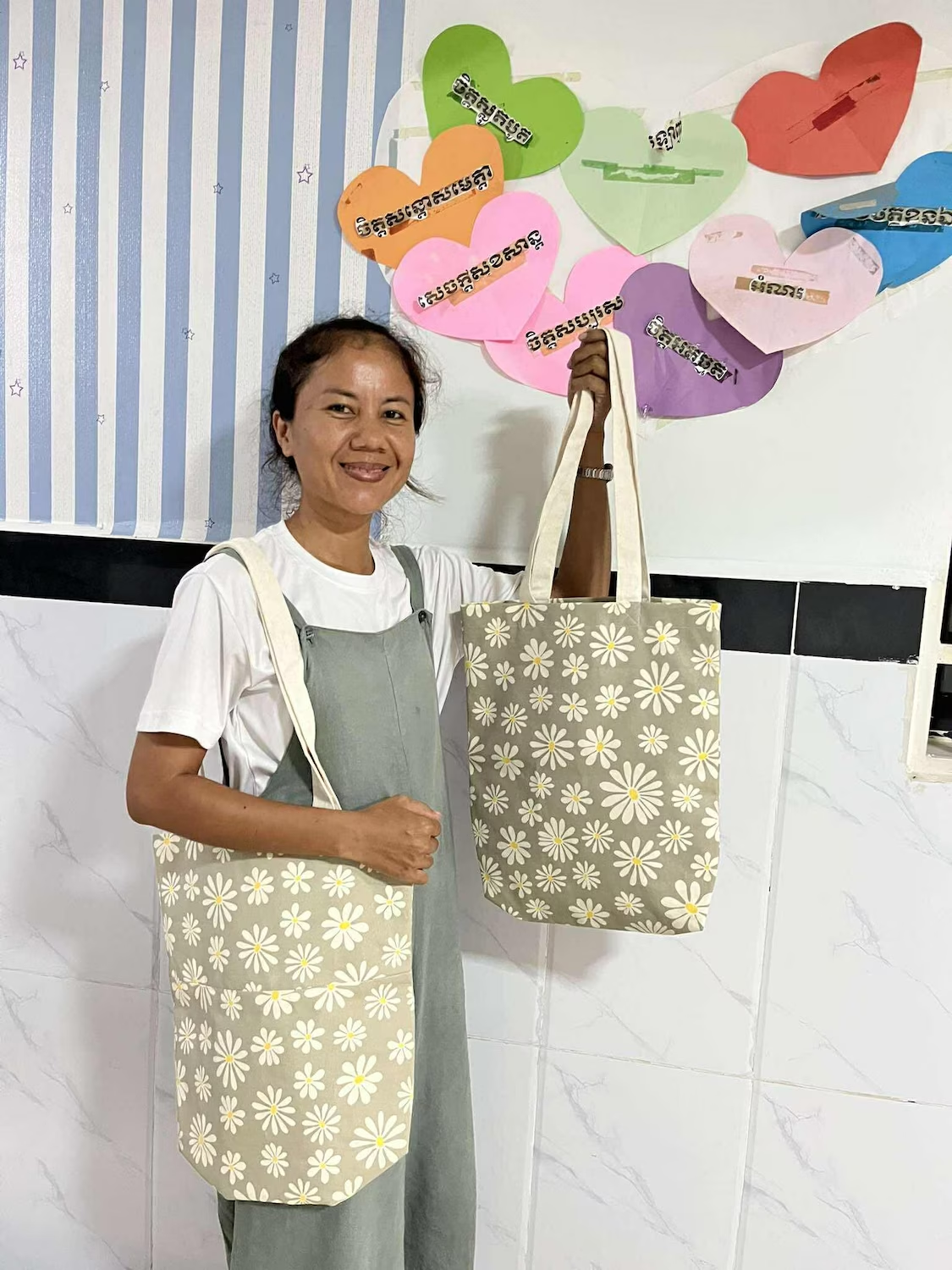
Sinet So
Sinet lives in the garment factory precinct of Phnom Pehn and for years worked in the factories. Her mother has severe psychosis. This mental health condition is difficult to manage in a country with very few psychiatrists taking public patients and access to appropriate medication out of reach for the poor. There are times when Sinet has to take months’ leave from work to care for her mum 24/7. Unable to work, she sews from home and creates colourful tote bags and paper gift tags.
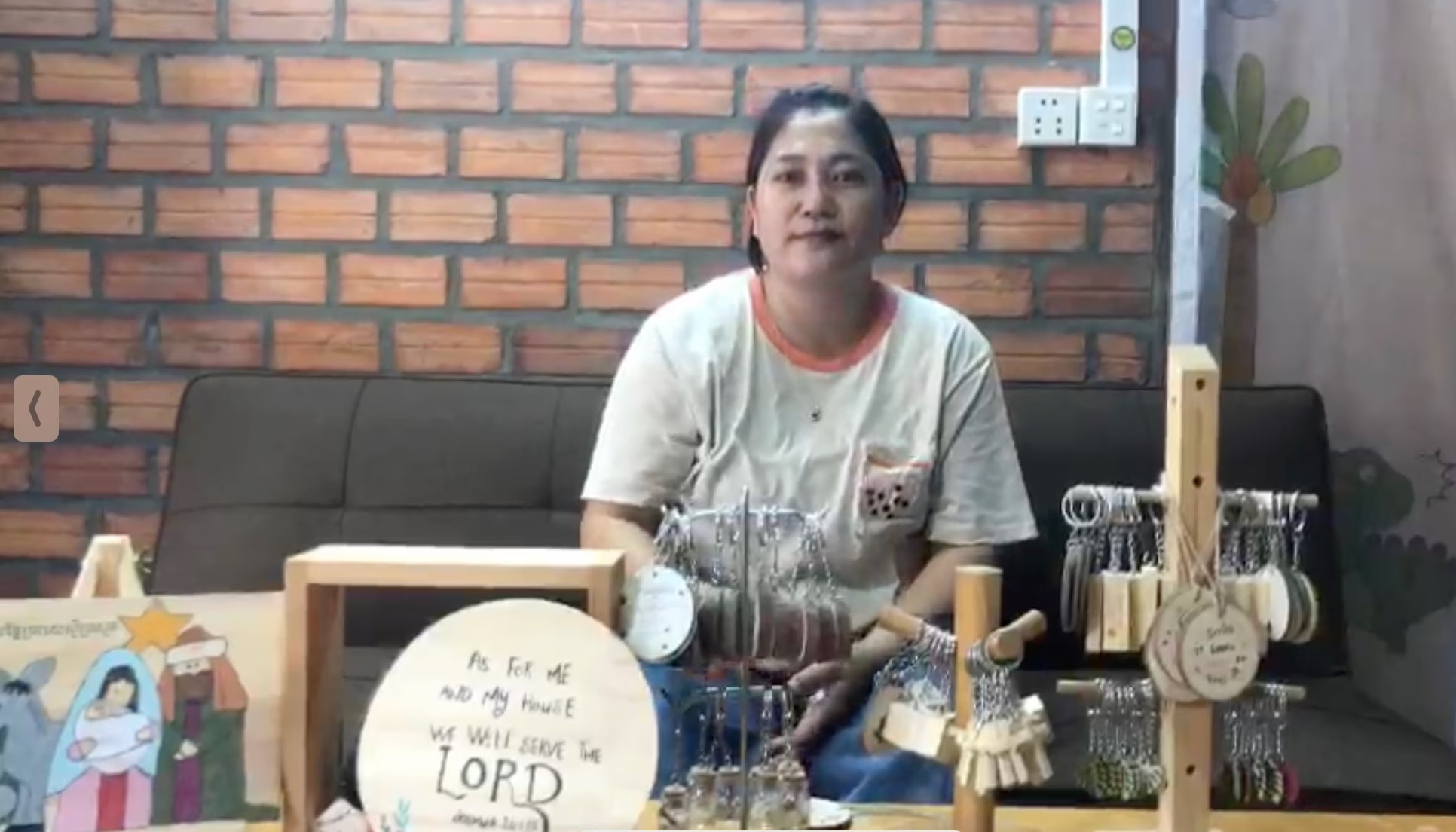
Sary Masel
Sary is a youth worker in a village outside Siem Reap. She makes hand crafted wooden items such as keyrings and a range of home decorations such as lights and wall plaques. She does this to financially support the work she does with young children. Money raised pays for resources and snacks.
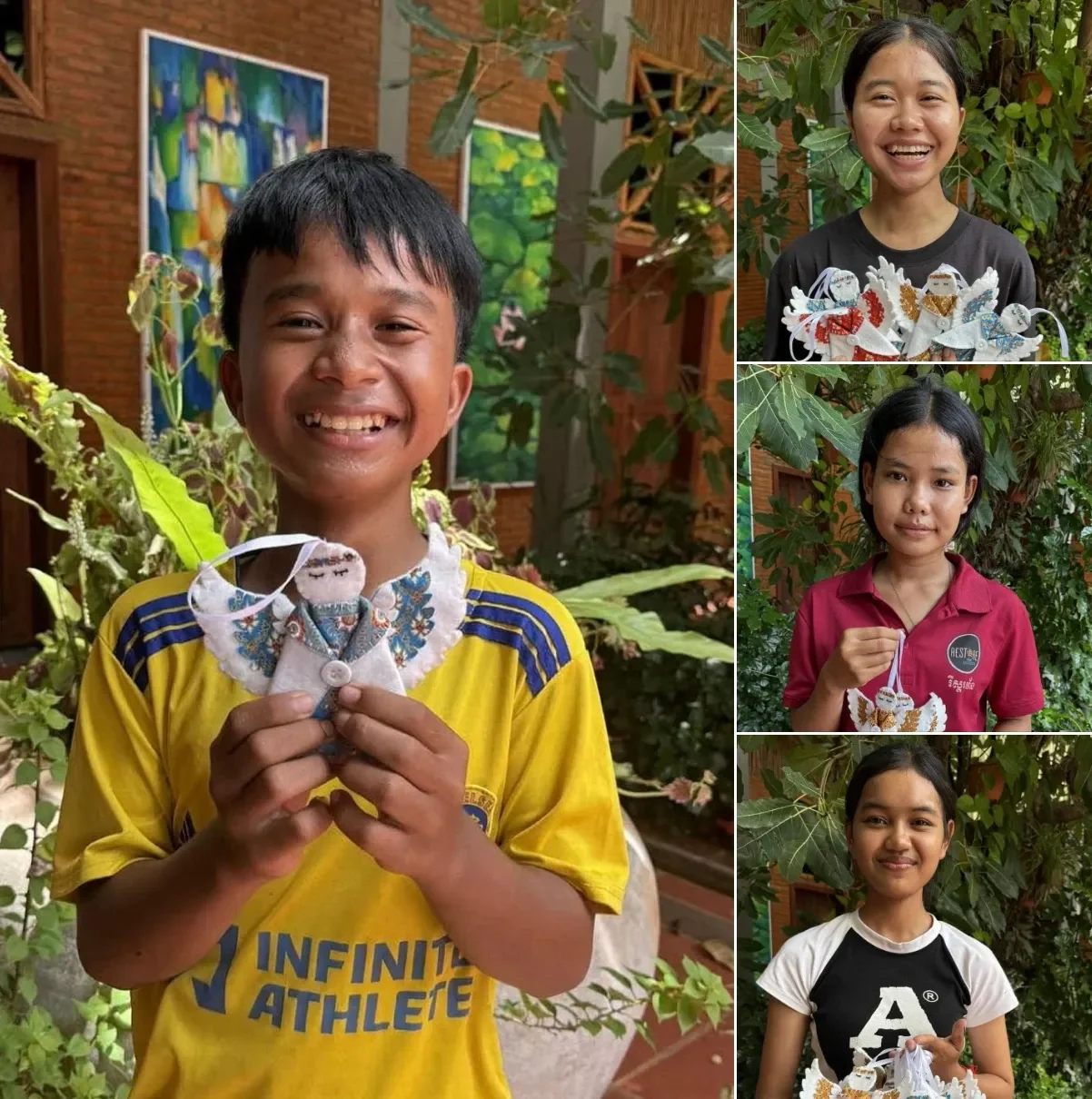
Restore One school students
Situated in the province of Kampong Thom (just north of Phnom Penh), Restore One has built a beautiful school complex for the kids in its surrounding areas. Each October, students are invited to make cute Christmas decorations that are sent to Australia for sale.
Educate
The Big Bike Giveaway
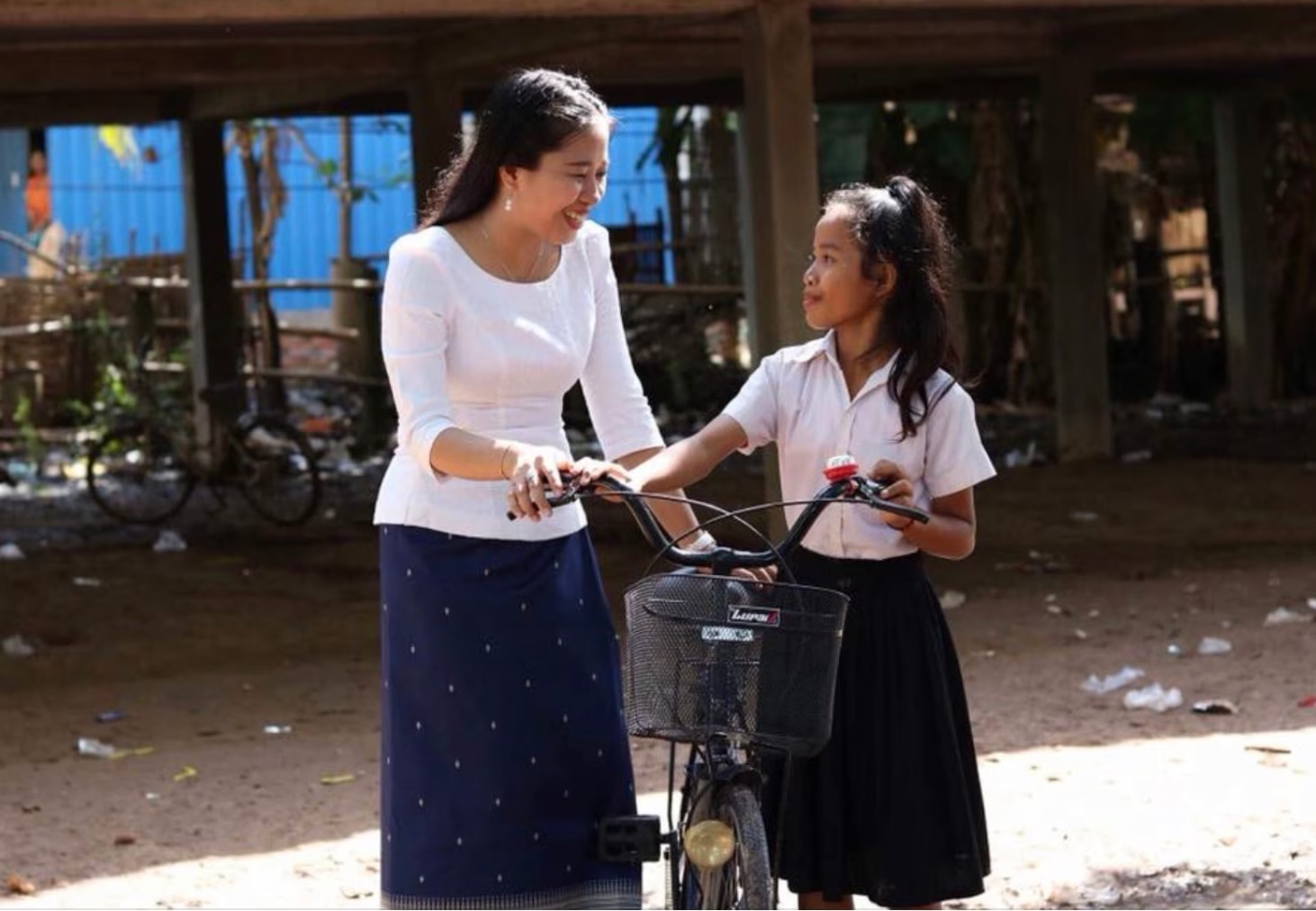
Each September REECH runs a FaceBook based campaign called The Big Bike Giveaway.
The aim of the campaign is raise funds for the purchase bikes that are quite literally given away to REECH-supported agencies including:
- DDSP, Pursat
- New Hope of Children’s school, Siem Reap
- Precious Woman’s scholarship program, Phnom Penh
- Peam village foundation school, Siem Reap
- New Life English language school, Phnom Penh
- Hard Places Community, Phnom Penh
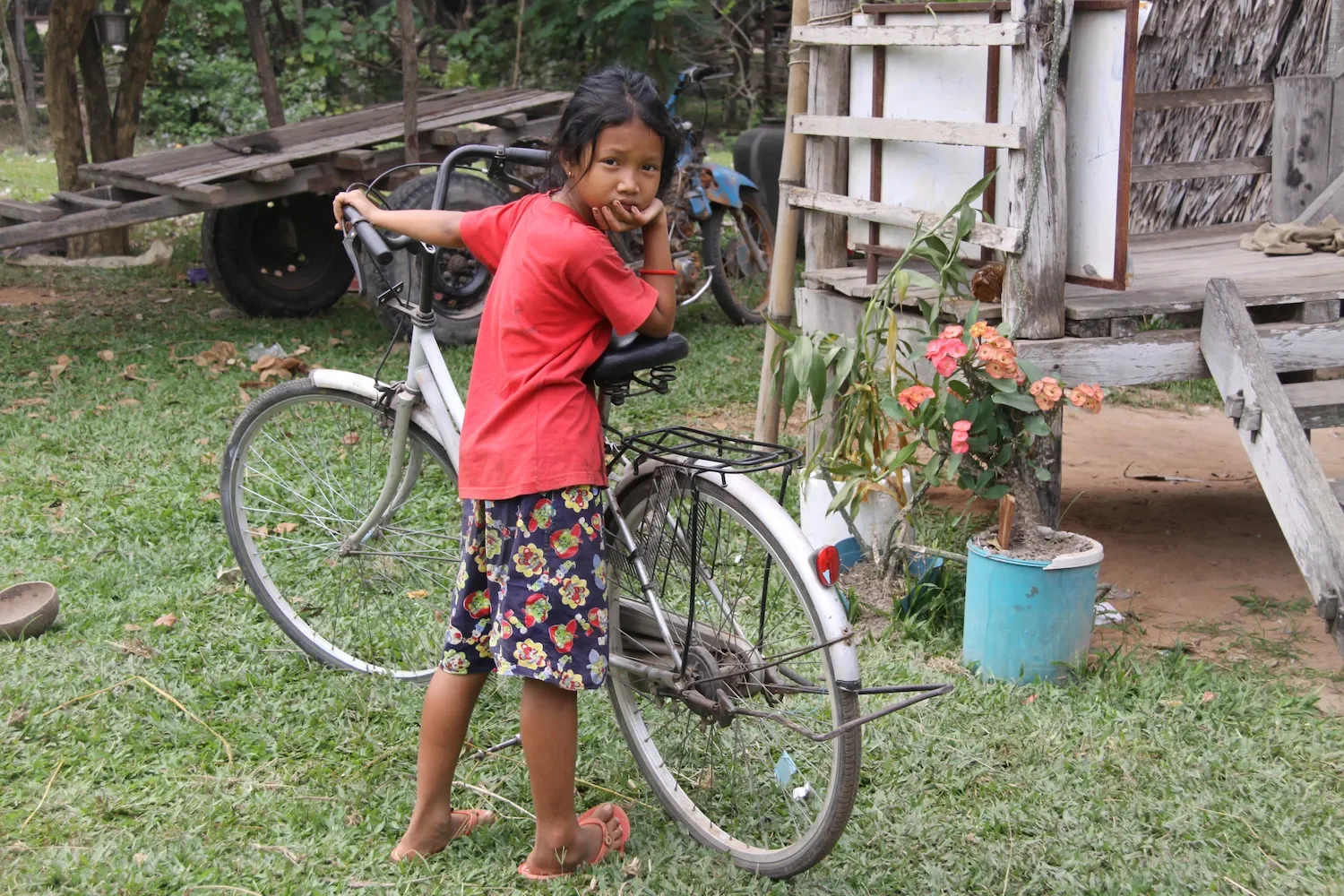
In a country where poverty is still widespread, the gift of a bike can be life-changing for a family. Many mums living in rural areas such as Pursat (the home of DDSP) use their bike to take home grown veggies or chooks to the local markets for sale. As an income generating item, a bike fits nicely into REECH’s EQUIP focus. However, bikes are most often used by kids to get to school and, for many girls, to get there safely.
Kids living in remote rural villages often stop their education once they complete a couple of years schooling at the local primary school. Gifting school students a bike means they can ride to the neighbouring town to go to high school or to an English language school (such as the kids attending the Peam village foundation school). Either option drastically improves their chances of getting a more secure job than working on the family farm.
The mums of young girls living in and going to school in Phnom Pehn reported to Precious Women – a REECH supported agency – that their daughters are molested or sexually assaulted by the tuk tuk drivers taking them to school. Not surprising, these girls drop out of school so they can stay safe. REECH doesn’t think this is a good enough reason to stop attending classes so it provides bikes to Precious Women to ensure the teenage girls and young women they support can get to class safely and without harassment.
Bikes are also requested by Phnom Penh agencies such as New Life English language school and Hard Places Community to ensure uni students can get to English language classes. Uni text books and many classes are in English and the students are, obviously at a huge disadvantage if their English isn’t proficient to stay up with their lecturers.
To gift a bike costs just $100. To contribute check out REECH Cambodia’s Facebook page during the month of September when this campaign is run.
Educate
Touch of Dignity Project
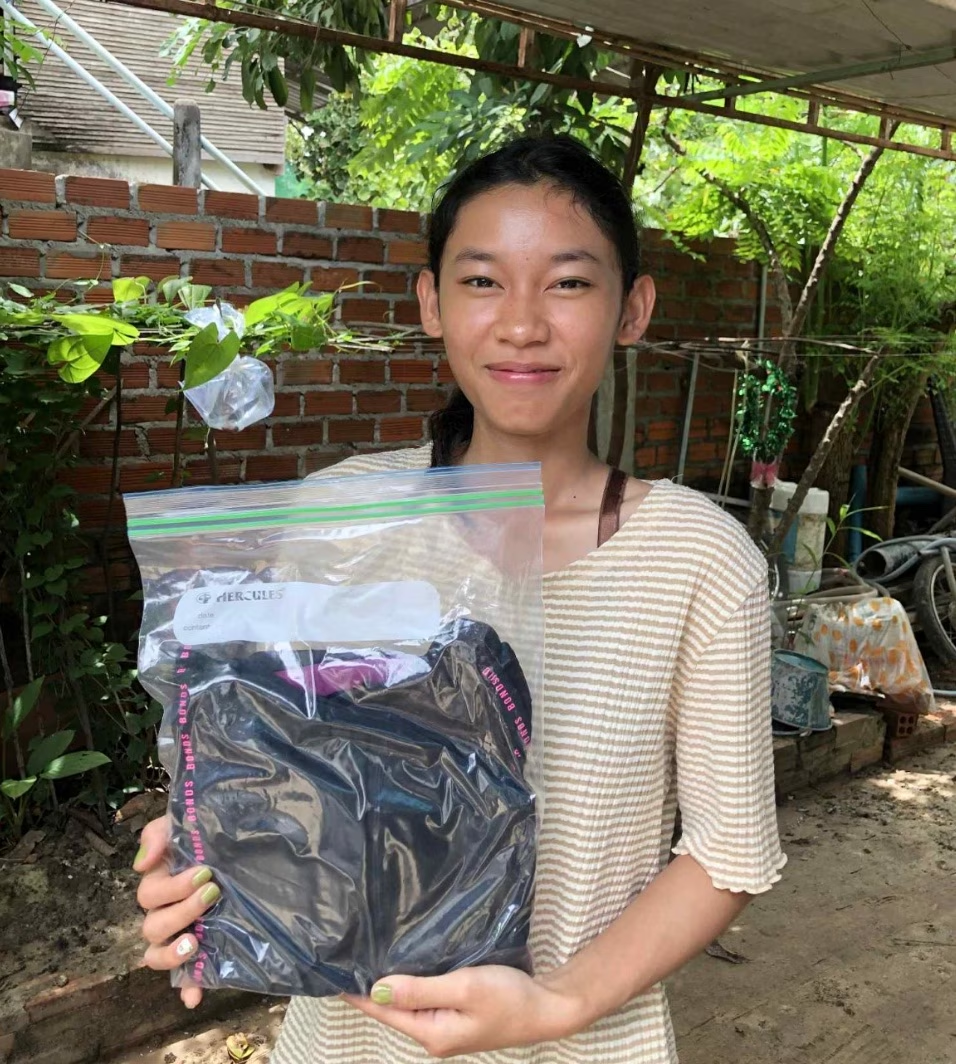
Research suggests that up to four out of every ten Cambodian teenage girls miss out on class because they can’t access period products. Labelled “period poverty” this is a very real issue for thousands of girls across Cambodia, particularly those in rural areas where period products are either difficult to obtain in small remote villages or so expensive they are out of reach for poor student.
For years REECH Cambodia has been providing Australian made Days for Girls kits to hundreds of girls, teenagers and older women. These sustainable pads can be easily washed and last for years enabling girls to attend class every day of every month. For a variety of reasons REECH is no longer able to distribute Days for Girls kits. Our commitment to ensuring all girls have access to period products however remains strong and has led to REECH initiating the Touch of Dignity project. The aim of this project is to provide teenage girls and young women who are studying with REECH partner agencies with period products.
The project was launched on Mothes’ Day in mid May 2025. Women were invited to honour their mothers by empowering young Khmer women through gifting them with period undies – reusable undies with built-in absorbent, leak-resistant and moisture wicking layers that keep girls dry and comfortable. The undies can be washed and reused; they’re secure and confident
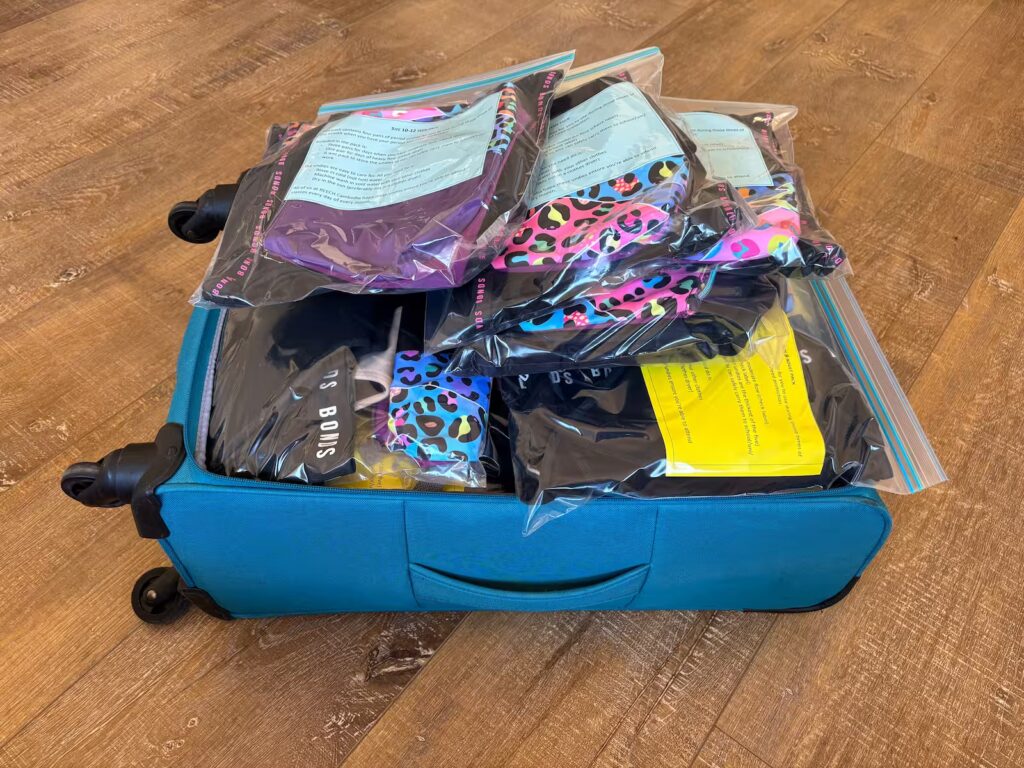
We were overwhelmed with the Mothers’ Day response. REECH received over one hundred period undies in a variety of absorbency levels (moderate or heavy flow + overnight). These were assembled into packs of five according to size. Each pack contains two moderate and two heavy flow undies + one overnight pair as well as a zipped wet pack so soiled undies can be safely carried to and from school or uni. Fifteen packs were taken across to Cambodia in July and gifted to REECH supported students. They couldn’t wipe the smiles off their faces as they realised what a gift they had been given: confidence to be in class every day of every month.
If you’d like to be part of the Touch of Dignity Project that provides period undies to young Khmer women, check out the REECH FaceBook page around end April- early May as the campaign is run in conjunction with Mothers’ Day.
Educate
Laptop Lifeline
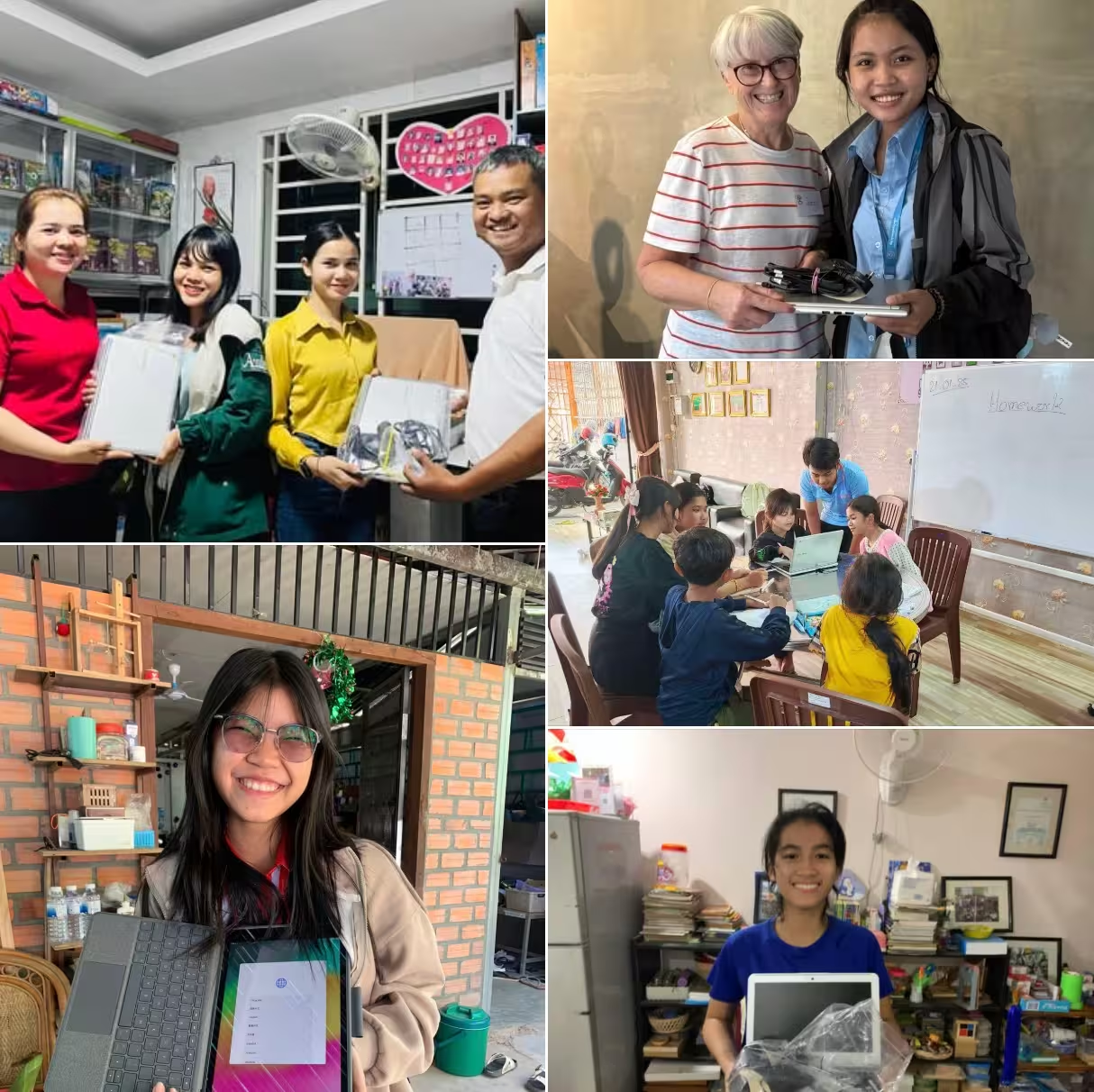
Young women working in the garment factories of Cambodia have often been taken out of school when they’re still young teenagers and sent to the country’s capital, Phnom Penh to work. Many of them find the work in these factories unsafe and tedious with expectations of long work hours and sexual favours for those who supervise them.
Several local not-for-profit agencies work in the factory precinct to provide alternate career pathways for the young women. Hope for Cambodian Women (HCW) is one such agency. HCW has an education program that provides opportunities for the girls to return to school, complete their national Year 12 exams and go to university.
Cambodian university students, like those in Australia, depend on the use of personal computers to undertake coursework, access online reference material and submit assessments. However, obtaining a personal laptop is simply out of the reach of the garment workers HCW supports.
Through generous Australian based donors, REECH provides university students who are part of HCW’s education program with pre-loved laptops. These laptops have been cleaned and are ready to pass on to students. Gifting a student with a laptop is a game changer for them and their studies.
Finding sources of pre-loved laptops is not always easy. REECH is always interested in potential sources to meet the growing need amongst the students. Should you have a recent laptop you’d like to gift, please make contact with REECH.
Stay up to date
Follow our blog to see the ongoing impact of our programs.
August 2026 Newsletter
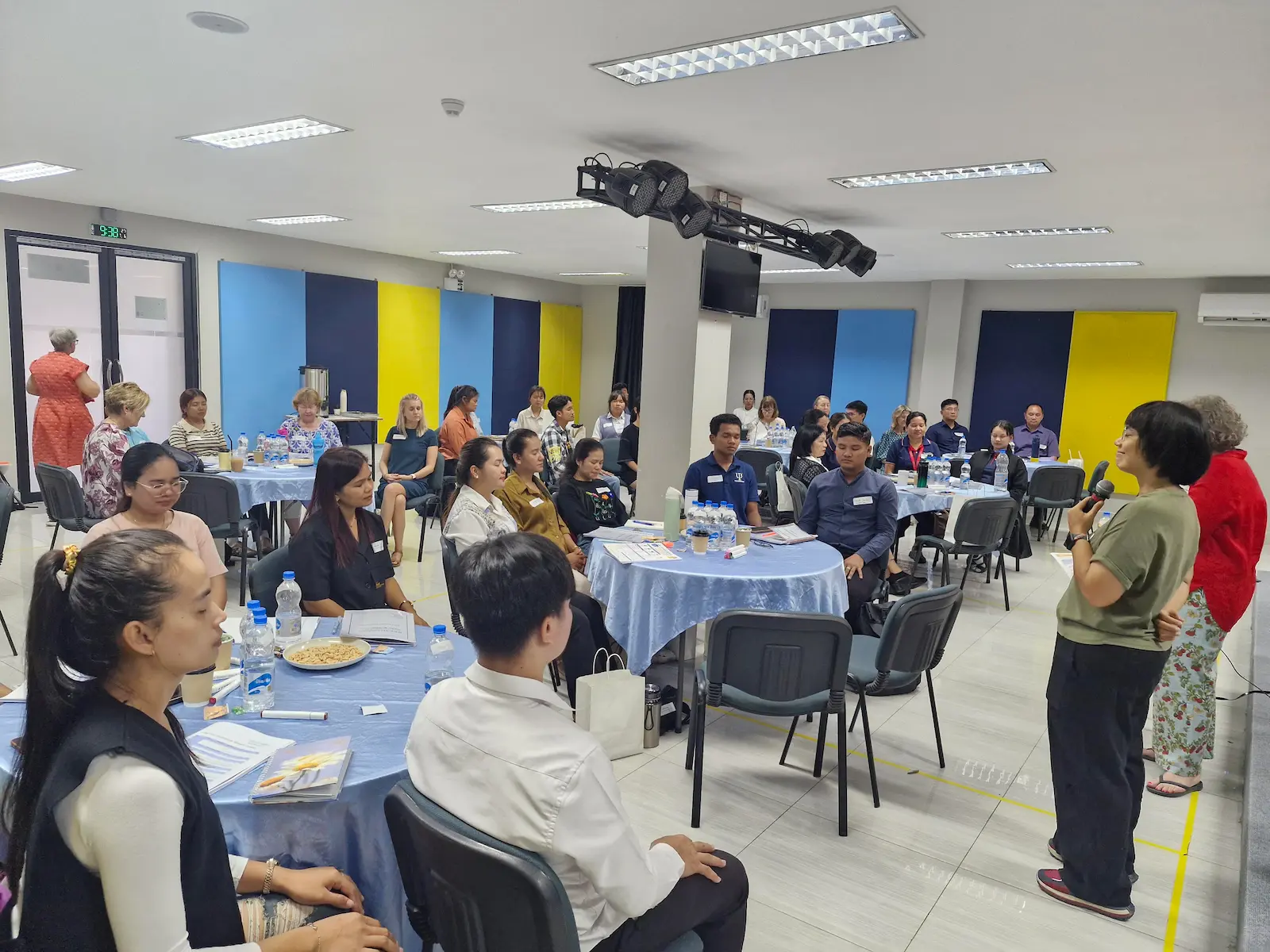
This July, our team of twelve Australian educators and specialists provided professional development for nearly 90 teachers from 20 REECH-supported organisations across Cambodia.
REECH Cambodia’s July-September 2025 update
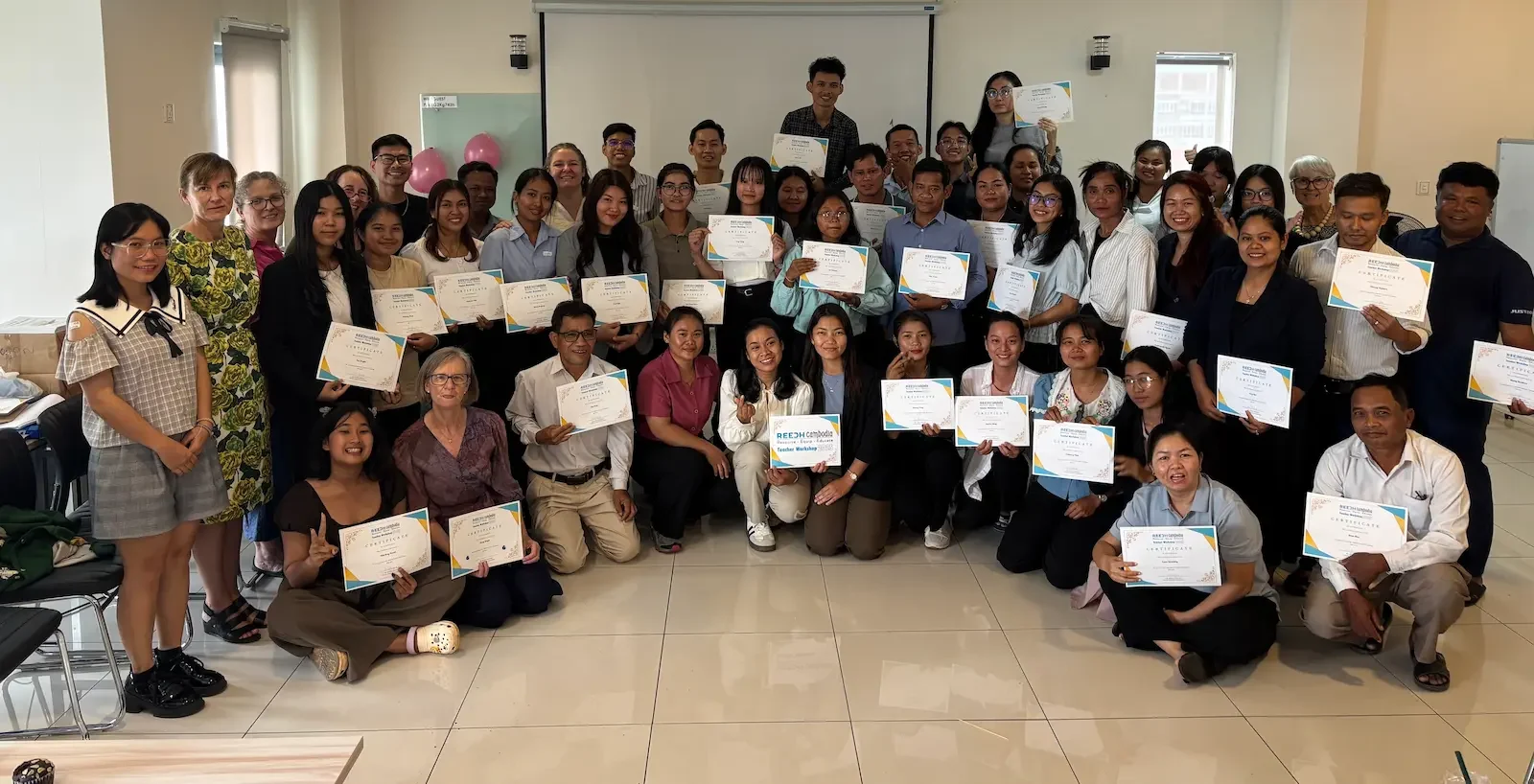
Grab a cuppa and settle back for a good read as we share news of the amazing projects that have kept us out of mischief.
REECH touches the lives of Cambodia’s poorest of the poor
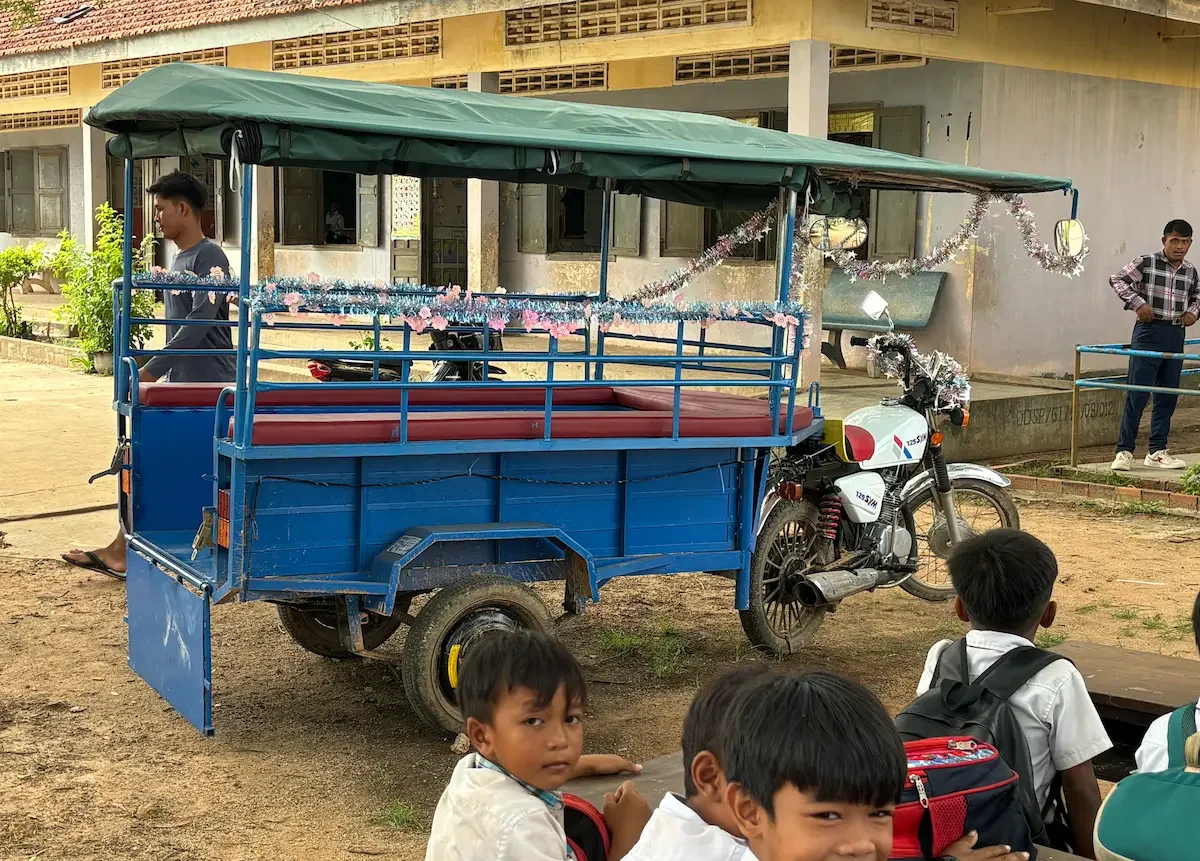
For the close to 20 years REECH has been working in Cambodia, it has supported 40 grassroots agencies working with highly vulnerable, “at risk” infants, kids, teens and young adults.
Donate today
Your generosity helps create real change for families and communities across Cambodia. Every donation equips local leaders, supports education, and builds brighter futures.